One-stop strategy emerges as the main option for the Formula 1 Belgian Grand Prix. The low degradation observed during practice sessions has positioned the combination of Medium and Hard tyres as the quickest route for the 44 laps at Spa-Francorchamps.
Simulations indicate that a two-stop strategy could cost around ten seconds relative to the most efficient alternative. For those who start on Mediums, the optimal window to switch to the Hard compounds lies between laps 17 and 23, allowing for a longer opening stint and greater flexibility in the event of a potential safety-car intervention.
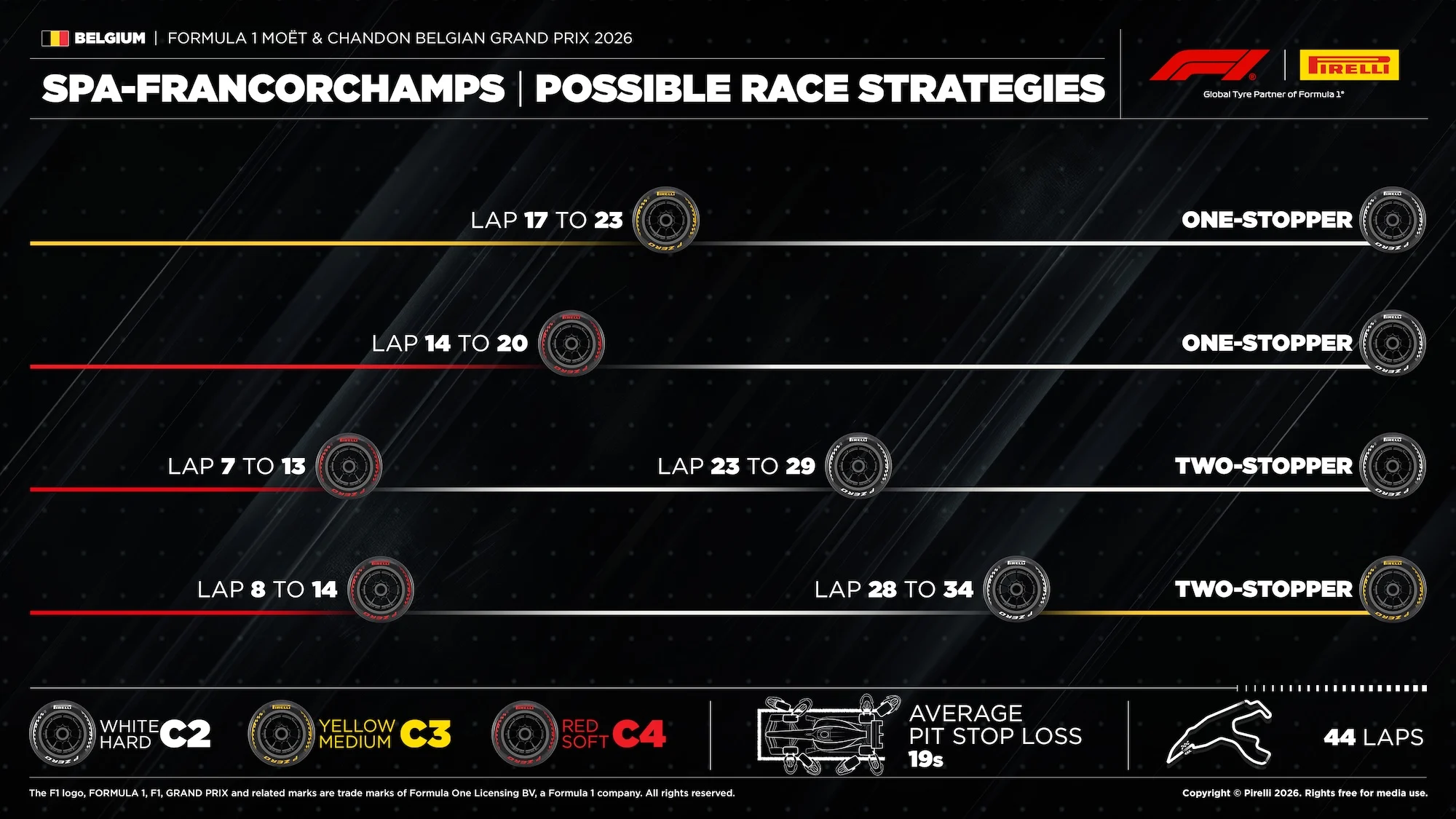
Soft tires, however, also emerged as a competitive option. The compound showed an advantage of roughly half a second over Mediums, but without the typically high degradation associated with that performance gain. In this scenario, the switch from Softs to Hard tires would be made between laps 14 and 20. “We expect a split in the grid, with the first stint on the Mediums or Softs and then the change to the Hard tires,” said Dario Marrafuschi, Pirelli’s motorsport director.
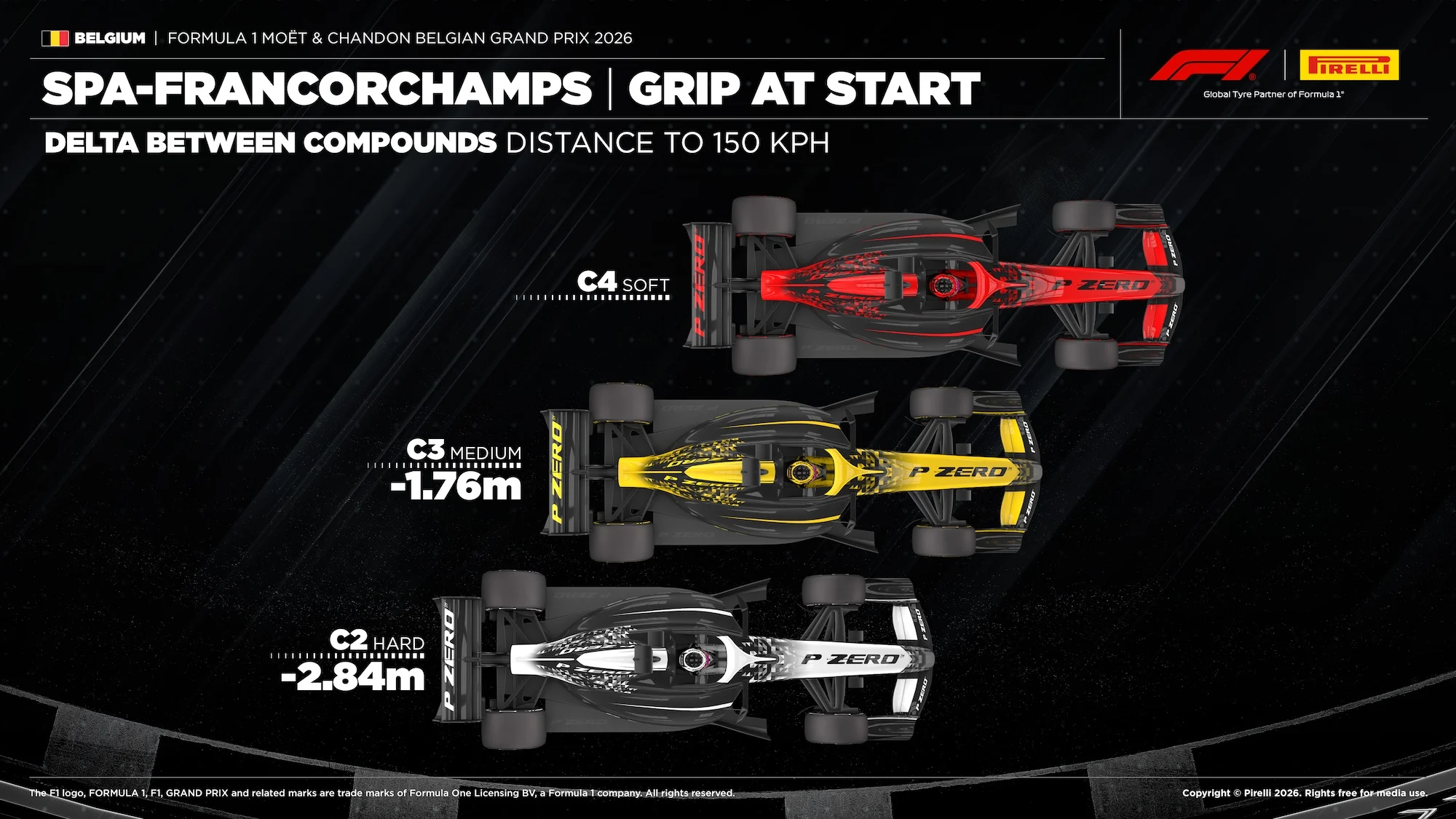

Drivers starting further back may adopt an inverted strategy, beginning on Hard to stay on track while the mid-pack heads into the pits. The window to switch to Medium would be ideally laps 24 to 30, while opting for Softs in the final stretch would push the stop to the interval between laps 27 and 33. Lando Norris, 13th, and Isack Hadjar, 21st, are among the names who could pursue an alternative to regain positions.
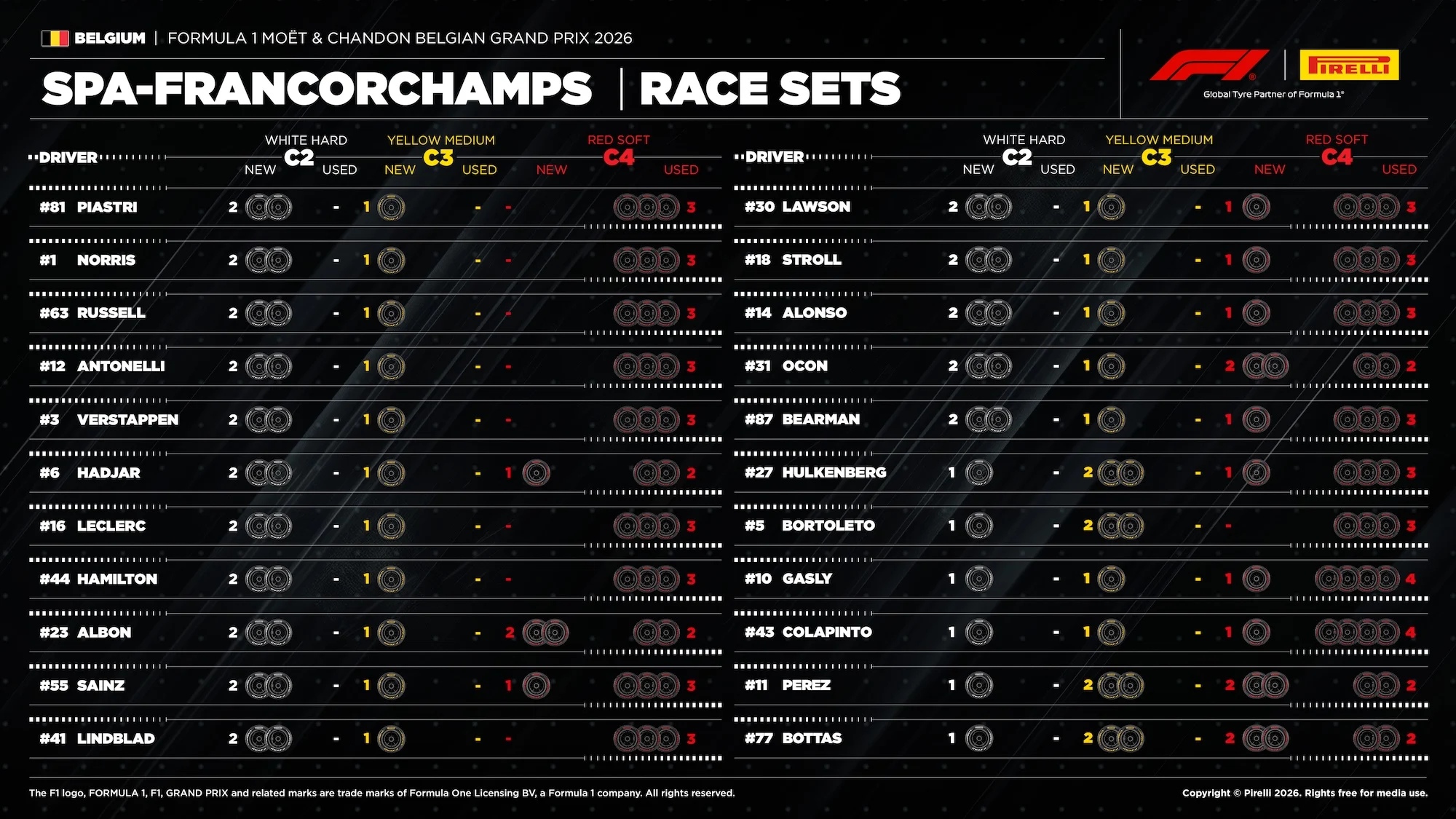
The forecast points to 19°C and no possibility of rain, which reduces the influence of weather on decisions. A green-flag stop represents an approximate loss of 18.5 seconds, versus 11 seconds under a safety car or virtual safety car, a factor that can completely alter the timing of the pit stops. Friday’s data also positioned Mercedes as the benchmark in race pace, with Ferrari, McLaren, and Red Bull separated by less than four-tenths of a second per lap.