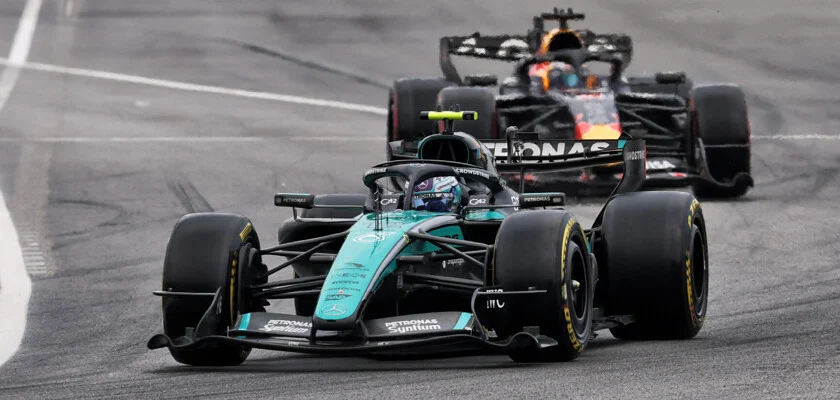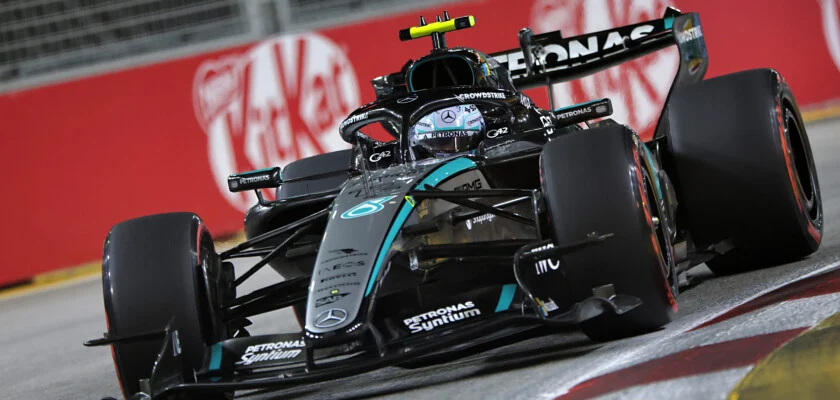
Mercedes will bring to the United States Grand Prix of Formula 1 a new front wing to try to correct the W17’s aerodynamic imbalance. The piece, briefly tested by Kimi Antonelli in Singapore, adopts a different concept and will be important in defining the team’s next technical steps.
The problem emerged after the updates introduced in Sepang, which increased the car’s aerodynamic load but also altered its operating window. The result was an balance overly biased toward the front, compromising predictability and accenting rear instability.
The new wing appeared for the first time during FP1 in Singapore, at an initial data-collection test. Mercedes, however, decided not to use it for the rest of that Sprint weekend due to limited spare-parts availability and the need to control spending within the budget cap. The team preferred to study the results more deeply during the August calendar break.
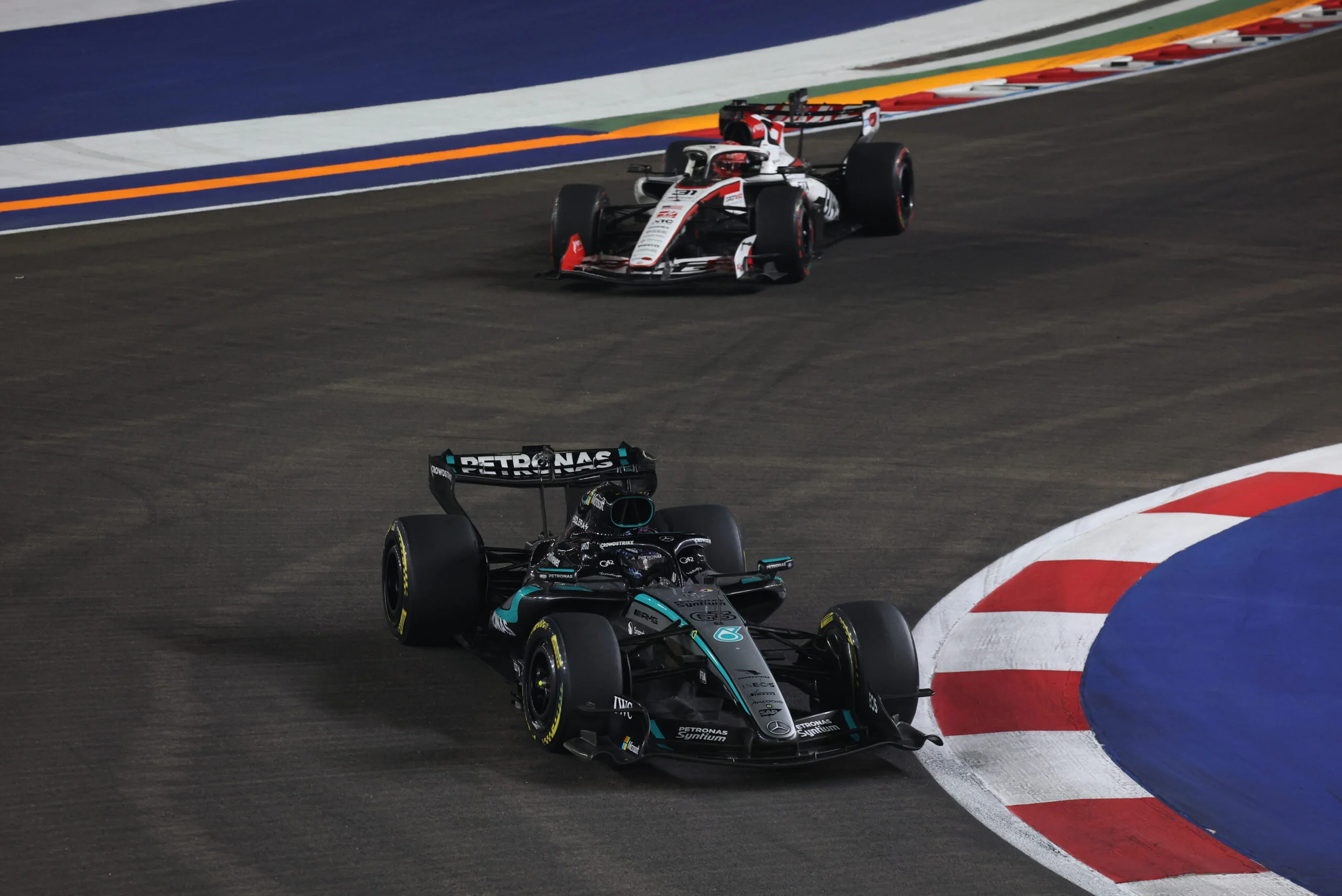
This redesign of the wing includes a new distribution of load among the flaps and the return of a larger chord on the main plane, the structure to which the two nose pylons are fixed. The main novelty is the adoption of two movable flaps on the front wing, a solution Mercedes first introduced this season.
The change is aimed at restoring the W17’s stability and helping its drivers find a more predictable behavior in the final stages of the season. Before taking the Sepang package to the track, engineers expected a gain of approximately three-tenths of a second per lap, but the predicted performance only appeared partially.

Therefore, understanding the gap between the expected results and what was achieved on track has become a priority for Mercedes. Although the 2027 regulations foresee a reduction in aerodynamic downforce as required by the FIA, establishing a technical direction consistent with the W17 will also be crucial to guide the development of the next car.