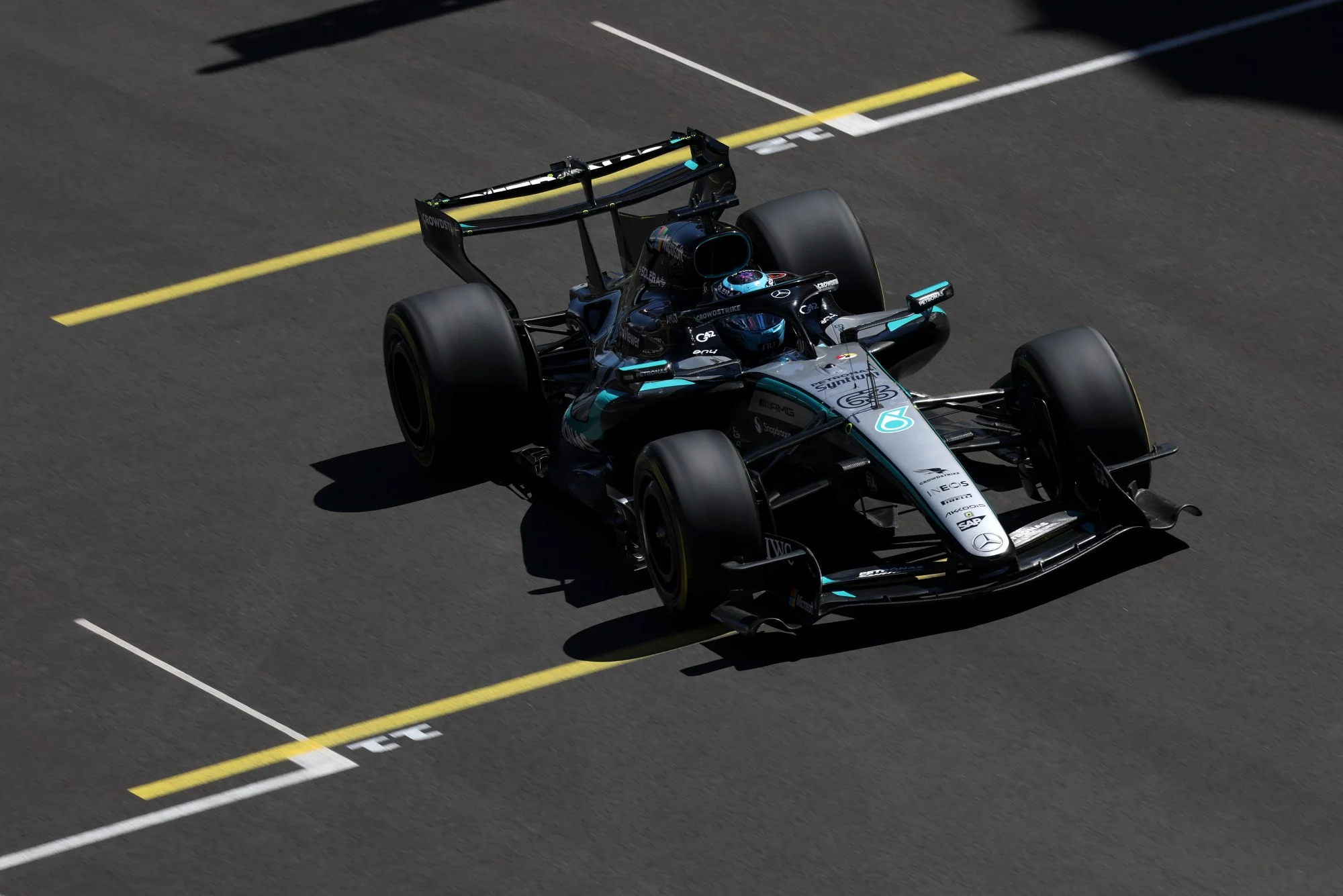
George Russell is not expected to incur a grid penalty at the Azerbaijan Grand Prix in Formula 1. Mercedes adjusted its planning and decided to preserve the current components of the British driver’s car in order to introduce the next evolution of the power unit further down the line.
The swap in Baku had been treated as a likely scenario, as Russell approached the limit of his component usage. The new strategy, however, allows Mercedes to avoid fitting an additional unit to the car right now, and consequently, not force the driver to start at the back of the grid.
The team’s objective is to extend the lifespan of the current setup used by Russell until the United States Grand Prix at the end of October. It is in Austin that Mercedes expects to have an upgraded internal combustion engine available, allowing the Briton to move straight to the updated version.
Until this development arrives, the upgrade is not expected to be used by Mercedes’ customer teams, including McLaren. The priority has shifted to managing the available components and delaying the change until the moment deemed most advantageous.
The plan only became feasible because the parts used by Russell remain fit for continued service. The situation differs from what Kimi Antonelli has faced, whose failures over the season caused damage that could not be reversed and contributed to the need to resort to a fifth engine, in addition to the possibility of a new penalty with the introduction of the ADUO system.

With Russell’s components recoverable and a spare available, Mercedes has gained leeway to adjust its schedule. Thus, rather than risking the Azerbaijan weekend with a grid penalty, the team intends to manage the current mileage and target bringing the new engine to the United States Grand Prix.