The opening of the 2026 Formula 1 season at the Australian Grand Prix promises a much more unpredictable race than the qualifying suggested. Even with Mercedes dominating the starting grid, tire strategies could be the decisive factor in determining the winner in Melbourne.
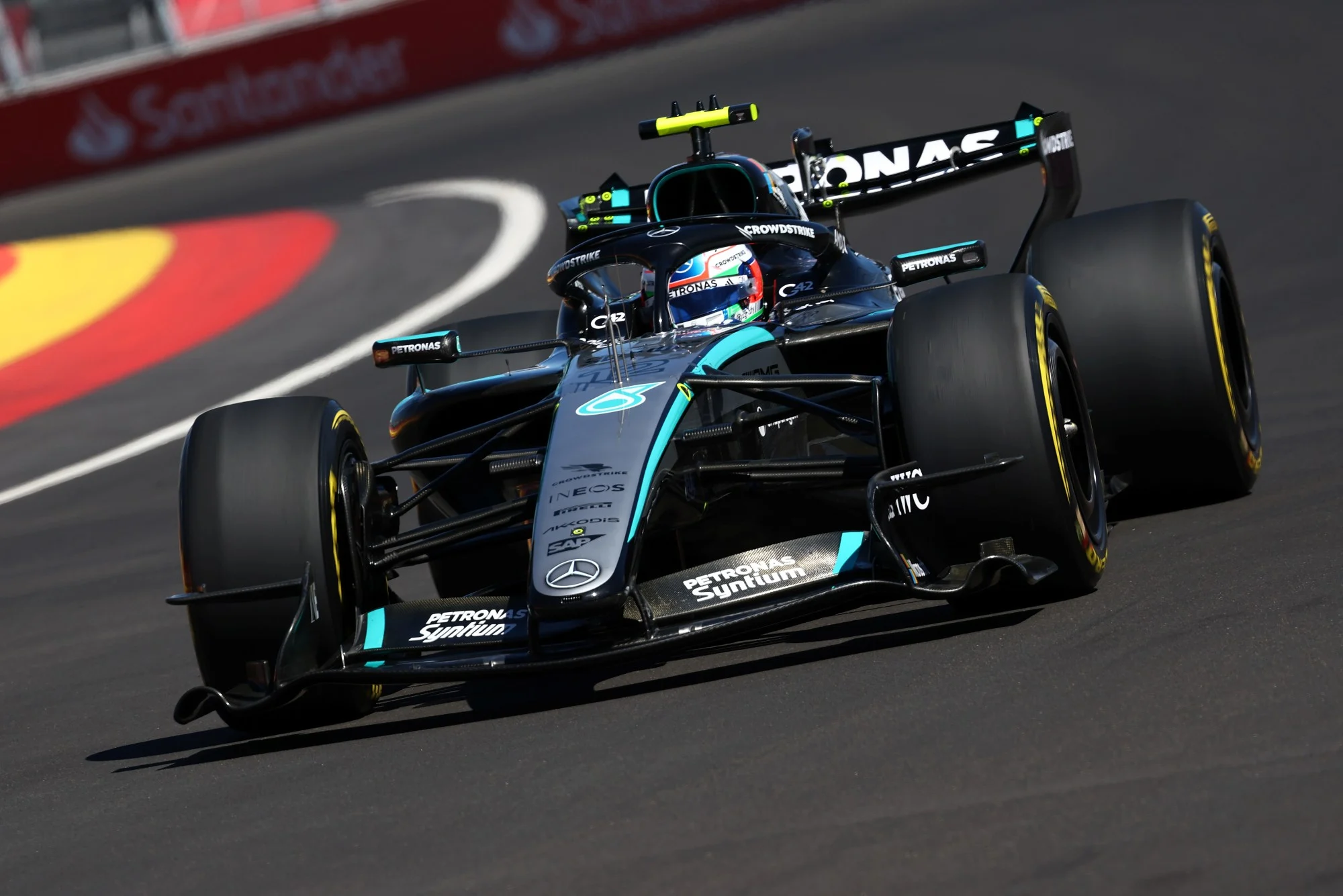
George Russell secured pole position with authority, three tenths faster than his teammate Kimi Antonelli, ensuring the first row entirely for Mercedes. However, the race scenario is expected to be much more complex, especially since the pace of the race and strategic decisions tend to have a greater impact than the position on the grid.
The difference seen in qualifying was impressive. Isack Hadjar, who finished third, was about eight tenths behind the pole, a margin that in recent seasons could separate a large part of the grid. Even more surprising was the absence of Max Verstappen in the dispute after his accident in turn 1, which left him without a recorded time in the session.
With this scenario, Sunday’s race at Albert Park can turn into a test of strategic execution. In the early stages of this new generation of Formula 1 cars, experts believe that the result may depend less on the best car and more on who makes the fewest mistakes during the race.
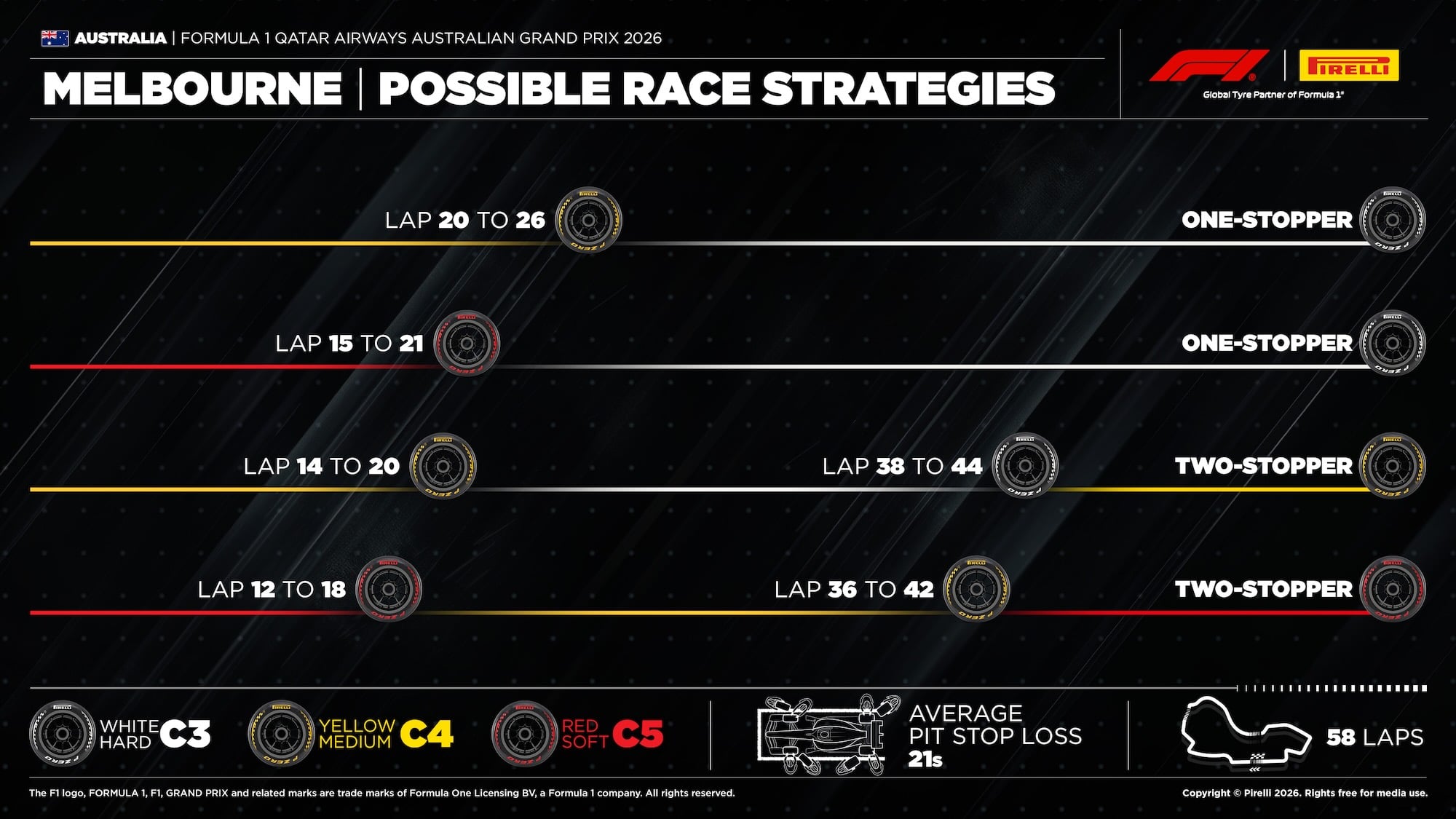
The data collected throughout the weekend indicates that a one-stop strategy should be the fastest to reach the checkered flag. The combination considered ideal by Pirelli is to start with Medium tires and switch to Hard tires, with the pit stop window expected between laps 20 and 26.
Italian supplier Pirelli believes that the three available compounds can work well in the race. According to Pirelli’s motorsport director, Mario Isola, the observed degradation was relatively low, which leaves room for different strategic approaches.
“We know that teams are managing graining at the front well and the observed degradation was low,” Isola stated. “With these indicators, we believe that a one-stop strategy is the fastest and that the three compounds can be used.”
Despite this, some teams that start near the front may opt for a more aggressive approach. An example would be starting with Soft tires and then switching to Hard tires, anticipating the stop between laps 15 and 21.
This strategy could be especially interesting for teams like McLaren, Ferrari, and Red Bull, which appear right behind Mercedes on the grid and may try to gain positions early in the race. On a circuit where overtaking is not simple, taking risks can be fundamental.
For drivers who start further back, the strategy can vary even more. Safety Car interventions are considered likely after the high number of red flags throughout the weekend, which can open up unexpected opportunities for those who are not in the ideal position on the grid.
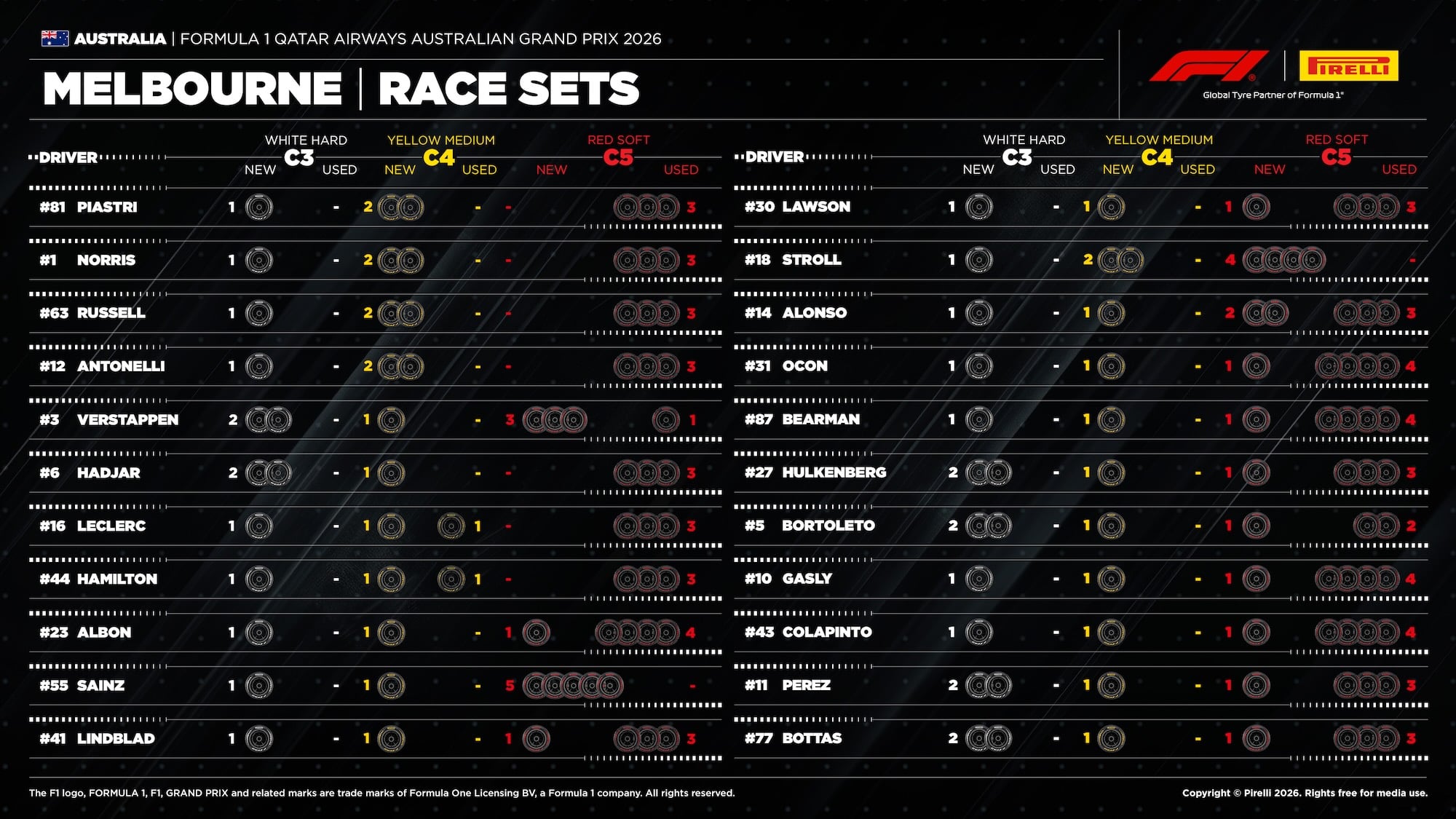
Max Verstappen, who starts in 20th position, may bet on an inverted strategy, starting with Hard tires before migrating to Medium or Soft tires at the end of the race. Other teams may try two stops, should an opportunity arise during the race.
The fastest options for two stops include combinations such as Medium, Hard, and Medium again, or Soft, Medium, and Soft. The estimated windows for this type of strategy are between laps 14 and 20 for the first stop and between 38 and 44 for the second.
The weather forecast should not influence the outcome of the race. After the rain registered at the beginning of the week in Melbourne, the expectation is for dry weather throughout the Australian Grand Prix.
With a more rubbered track and slightly lower temperatures than in the practices, tire management can become even more important. In a scenario with so many variables, the race can be much more unpredictable than the dominance shown by Mercedes in qualifying indicated.