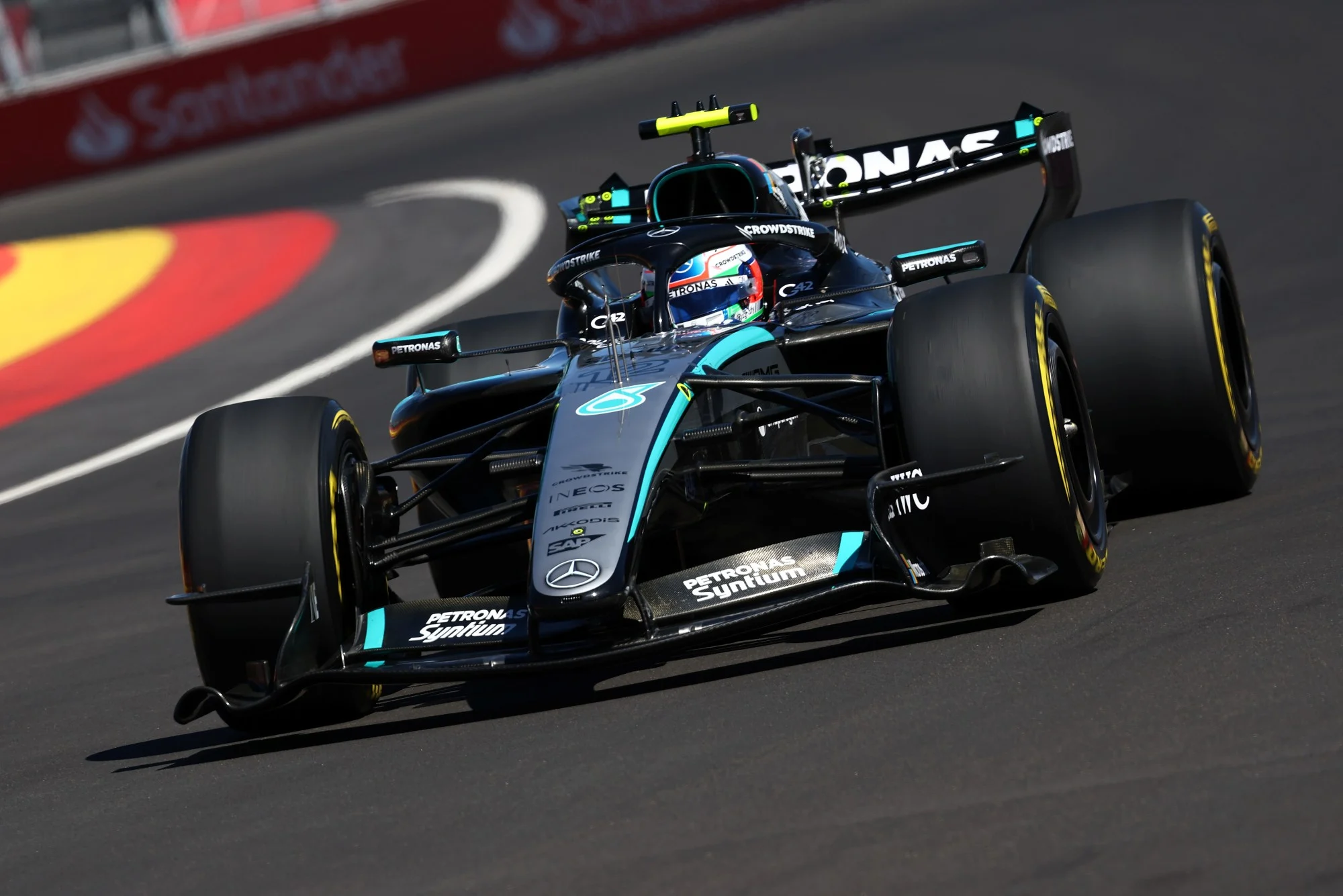
James Allison, Mercedes’ technical director, revealed the scale of the team’s development pace in the new Formula 1 era. According to the engineer, the gains recorded in the wind tunnel are roughly six to seven times larger than those seen in the previous season.
The radical regulation shift between 2025 and 2026 accelerated the evolution of the cars and allowed small updates to produce meaningful performance improvements. It also contributed to frequent changes in the competitive order, with teams able to alter their grid positions throughout the season.
“One of the defining characteristics of this regulatory cycle is how immature they still are,” Allison said on the Nu Silver Arrows podcast. “Development rates are enormous compared to previous years. On the aerodynamic side, the pace of gains we’re seeing in the wind tunnel is roughly six to seven times higher than last season.”
The Mercedes technical director estimated that this tempo translates into about a half-second of advantage every two months. For the team, the strategy before the season started was to push this evolution curve as far as possible, advancing the development of the initial car.
“We made a conscious decision before the season to push the first car harder than we had done before. We left things later than usual, and effectively built a program with almost no contingency margin,” Allison explained.

The choice allowed Mercedes to reach the opening race with a highly competitive car, but it also came with a consequence. The team front-loaded a substantial portion of its development potential, while rivals who completed their projects earlier were able to start working on updates sooner.
“They have been introducing updates while we were rebuilding our development line,” Allison concluded. As the teams are making gains at similar rates, the competitive landscape can shift rapidly, and Mercedes intends to stay at the forefront while awaiting its next wave of updates.