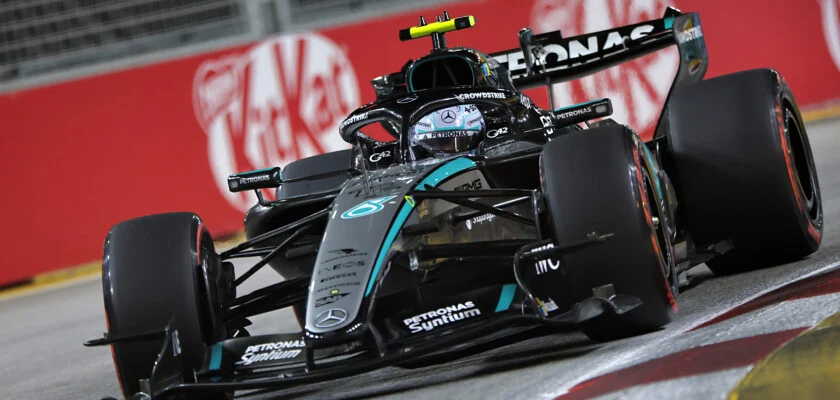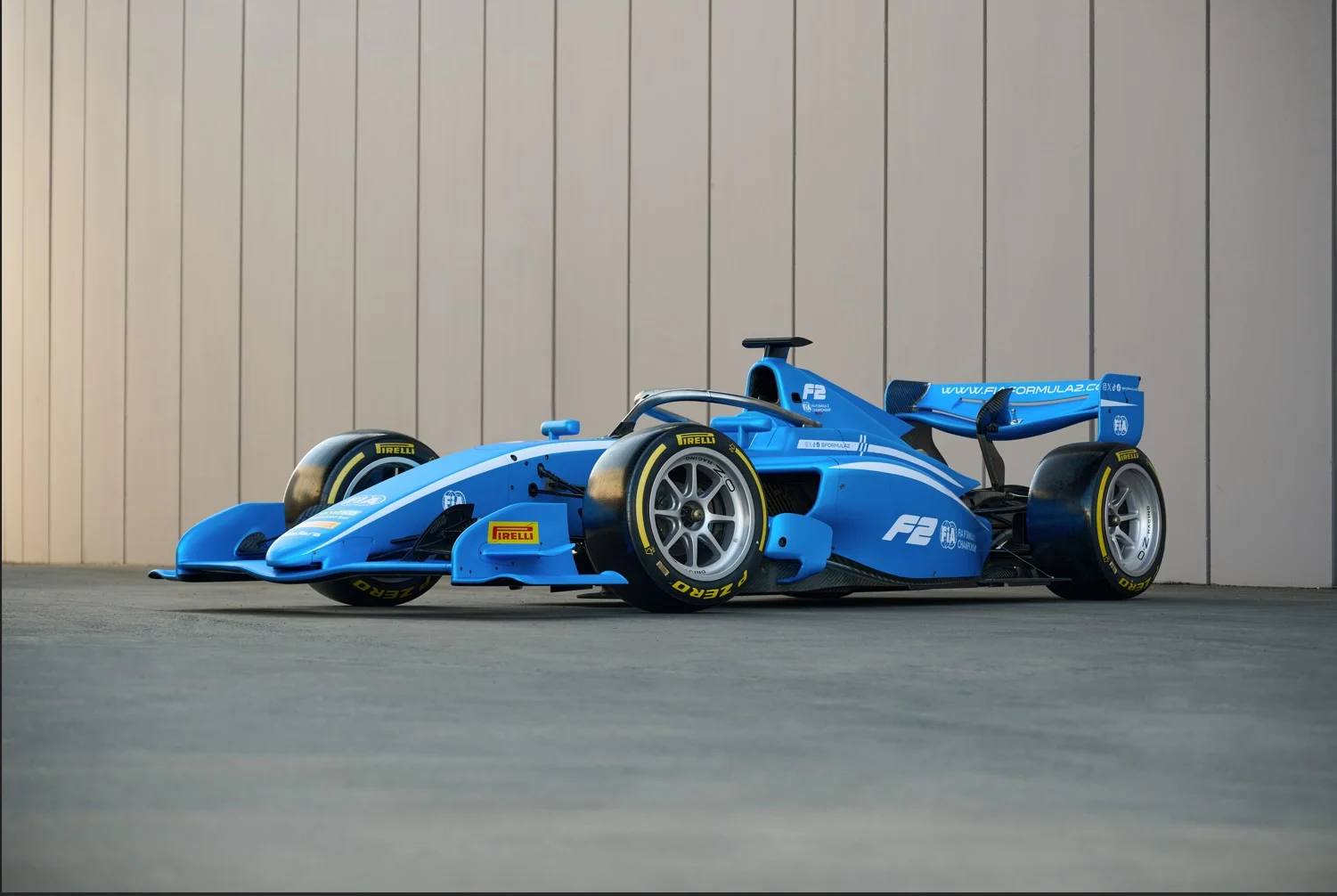
Formula 2 unveiled in Monza the car that will be used in the 2027, 2028 and 2029 seasons. The new generation keeps the 2026 Dallara chassis but receives aerodynamic and technical changes to bring the races closer together and to strengthen the drivers’ preparation for F1.
The main updates are in the front and rear wings, which have been redesigned from scratch. According to the category, the new concept will allow the cars to follow each other more closely, promoting on-track battles, and visually align the model with the current philosophy of Formula 1 cars. Retaining the existing chassis was chosen to control costs.
The engine remains the Mecachrome turbocharged V6 3.4 liters, fed by Aramco’s advanced sustainable fuel introduced in 2025. Pirelli remains the exclusive tire supplier, while Marelli’s electronic and hydraulic systems continue unchanged.
One of the main practical changes will be the installation of an on-board starting system. To this end, Hewland has developed an evolution of the current transmission. “This will allow drivers to relight the car after a stint or to prevent the engine from stalling on the track,” explained Bruno Michel, CEO of Formula 2, who also highlighted the aim of balancing cost control, closer visual proximity to F1 and better conditions for close racing.
Mohammed Ben Sulayem, president of the FIA, stated that the project seeks to raise safety and accessibility standards. “Formula 2 is where the next generation of great drivers is formed. The new 2027 car raises safety levels, enables closer racing, improves accessibility, and reinforces our commitment to sustainability.”

The car has already on-track debuted in Barcelona in June and has since undergone a development programme with Dallara, including wind-tunnel work and aerodynamic testing. The first kit will be delivered to teams in December 2026, with the second slated for January 2027.
The FIA Formula 2 car for 2027 – DETAILS
Dimensions
Total length: 5,284 mm
Total width: 1,900 mm
Total height: 1,097 mm, including the FOM nose camera
Wheelbase: 3,135 mm
Engine
3.4-liter Mecachrome V6 turbocharged engine
Power output: 620 hp at 8,750 rpm
Electronic throttle with fly-by-wire
Service after 8,000 km
Maximum torque of 570 Nm at 6,000 rpm
Monocoque and bodywork
Survival cell in a carbon honeycomb and aluminum honeycomb structure, with Zylon anti-intrusion panels, produced by Dallara
Front and rear wings in carbon structures produced by Dallara
Bodywork in carbon and Kevlar honeycomb structures produced by Dallara
Safety standards
Full compliance with FIA safety standards for F1 2024
Titanium halo with F1 specification
Gearbox
Six-speed longitudinal sequential Hewland gearbox
Electro-hydraulic actuation via steering-wheel paddles
Carbon ZF SACHS clutch
On-board starting system
Non-hydraulic ramp differential with external adjustment
Steering system
Rack-and-pinion steering, non-assisted, FIA 2024 specification
New XAP steering wheel with display, shift, clutch and DRS controls, plus indicators and VSC screens
Electronic systems
New Marelli Marvel VCU 480 ECU/GCU, with data logging
New Marelli FOX 442 power management unit
Pre-installation for CAN data acquisition
Beacon receiver
VSC and signaling system in FIA F1 standard
Suspension
Steel double wishbone, pushrod-operated, two dampers and front roll bars, with springs at the rear
Ride height, camber and toe adjustable
Koni dampers with two-way adjustment at the front and four-way at the rear
Adjustable front and rear anti-roll bars
Wheels and tires
O.Z. Racing magnesium wheels
Front wheels: 18 x 12 inches
Rear wheels: 18 x 13.7 inches
Pirelli tyres specific to F2, slick and wet compounds
Texense TPMS tire pressure monitoring system
Brakes
Six-piston Brembo monoblock calipers
Carbon–carbon brake discs and pads by Carbone Industrie
Fuel
Aramco advanced sustainable fuel
125-liter ATL FT5 fuel cell, FIA standard
DRS
hydraulically actuated DRS
Fire suppression system
New FEV system, electrically actuated, in line with FIA’s latest standards.