Remi Taffin, the technical boss at ORECA, indicated that the company is not certain how many manufacturers it will be able to back in the debut year of the new premier-category prototype regulations, highlighting the extensive workload anticipated for the totally new automobiles.
Announced last month at Le Mans by the FIA, ACO, and IMSA, a single set of technical rules is planned for 2030, to be used in both the World Endurance Championship and the WeatherTech SportsCar Championship.
Although the news has been welcomed by most participants, the French constructor, which has produced LMDh-based prototypes for four OEMs, expresses doubts about repeating that feat in the launch year.
“I have to say we have enough customers at the time [that] we work with than we can actually get on with again for this new cycle,” Taffin told Sportscar365.
“If you think of it from an engineering perspective, if you want to race a car in 2030, you have to test it over 2029.
“This is going to be a brand new car. It’s not like we’ll be recycling any of it. So we have to get on with the work by very early next year.
“We need to decide the regulations but you also need to decide your partners. The only thing we can actually [do right now] is to see who we are going to work with for 2030.
“It’s as simple as that because, it’s going to be a different arrangement. We will cope with it.”
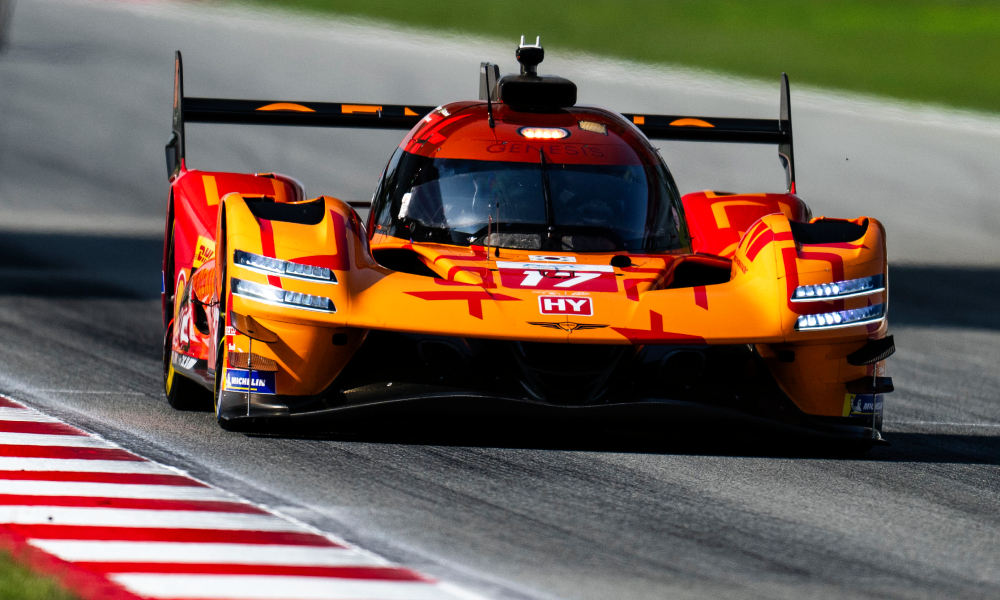
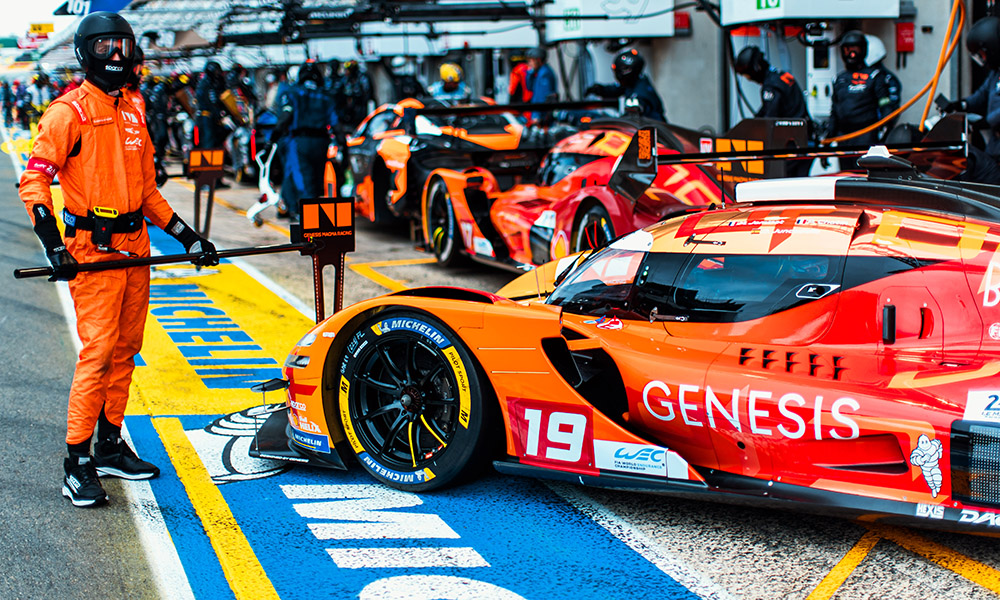
The first ORECA-based LMDh car was the Acura ARX-06, which debuted in the platform’s launch year in 2023 and was followed by the Alpine A424 the following year and most recently the Genesis GMR-001 that came online this season in the WEC.
The yet-to-be-named Ford Hypercar, which will debut in the WEC next year, is also being built on an ORECA spine.
While Acura has paused its factory LMDh program and its mid-term prototype future unclear, and Alpine set to exit the WEC at years’ end but is working to continue, with Signatech operating a modified version of the car for a new manufacturer, both Genesis and Ford, at a minimum, are expected to continue into 2030.
Taffin indicated it would be a tall order to build more than two Hypercar/GTP models simultaneously, something ORECA has yet to undertake, especially if OEMs will be permitted to utilize unique or modified spines, as was indicated by FIA chief technical and safety officer Xavier Mestelan-Pinon.
“The one thing we can read through is that it’s one platform but it’s complete freedom, eventually,” said Taffin.
“The situation is a bit different. When we got into the LMDh regulations, we kind of started with one, then made two, three, four. It was a sequence [over five years].
“We also had a [shared] spine that we re-utilized afterwards.
“Whether we’re able to make four cars at the same time, I’d say no. It’s as simple as that.
“It’s not like an easy one to do. If you look at the likes of Ferrari or Toyota, or whomever, there’s hundreds of people to make one car.
“We have to be pragmatic. We’ve demonstrated we can do one or two. But when it comes to make three or four…
“The fact is that the time is going to go quick and to be fair to anyone, by the end of this year, you should be able to ask any of the competitors that wish to race in 2030 what’s going to be their solution.
“Because if they haven’t gotten a solution in 2027, they’re not going to be racing in 2030.”
ORECA Believes “All New” Car Needed, Even for Existing LMDh Brands
While IMSA President John Doonan believes that current LMDh cars ‘won’t be obsolete’ in 2030, with a large amount of carryover, Taffin insists that the new-gen prototypes would essentially be cars built from the ground-up, largely due to new FIA safety cell regulations as well as new aerodynamic freedoms.
“It’s new safety regulation, and it’s very new,” he said. “The monocoque is going to be different. It was stated that there could be an upgrade on the hybrid system. There will be some new regs on the aero side of it.”
“Obviously when you make a car it’s also for a manufacturer, so there will be new bodywork and you get this to the end, it will likely have a new engine or a new iteration.
“In the end, if you read it very simply, it’s a new car.
“Whether you can carry over any of what we’ve got these days… I don’t think there will be much that we can carry over.”
“It’s not like it would be plug and play. If you make a new monocoque, you can’t just carry over the rest.”