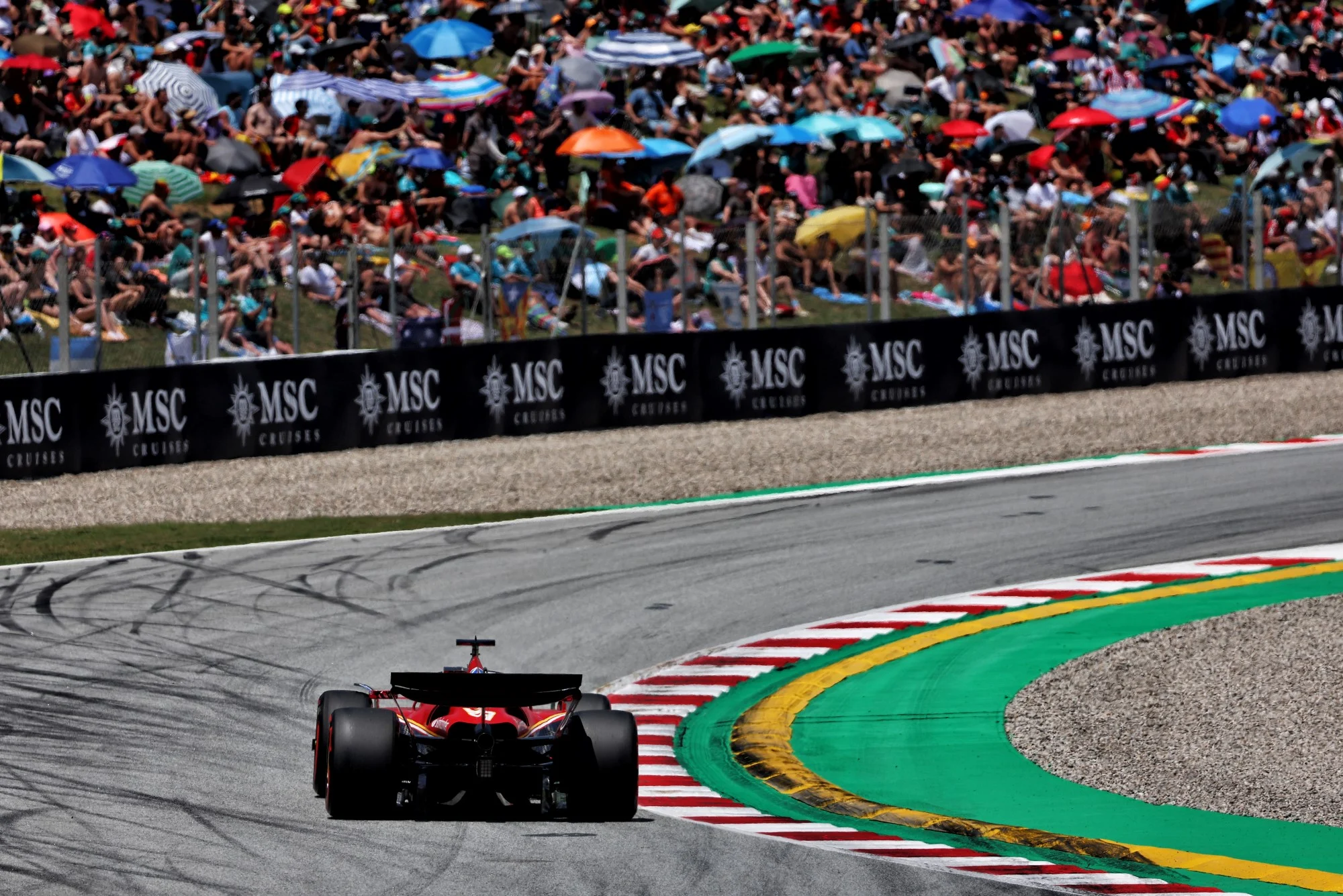
The removal of the final chicane returned to the Circuit de Barcelona-Catalunya part of its historic layout, increased the average lap speed, and changed the way drivers and teams approach one of Formula 1’s most technical tracks.
For many years, the lap at Barcelona used to finish in a somewhat unnatural manner. After traversing a circuit renowned for its high-speed corners and the technical balance demanded of the cars, drivers encountered a slow chicane installed in the track’s final sector.
The change had originally been implemented for safety reasons, but it was never unanimously supported by drivers, engineers, and fans.
In 2023, Formula 1 returned to using the layout without the chicane, reclaiming one of the Circuit de Barcelona-Catalunya’s historical characteristics. Since then, the behavior of the track has changed significantly, with impacts that are still being felt today.
Why was the chicane created?
The chicane was introduced in 2007 with the aim of reducing speed on the approach to the main straight. At the time, there were safety concerns, especially considering the evolution of the cars and the rising levels of performance in Formula 1.
The solution found was to insert a slow sequence of bends before the circuit’s last corner, completely breaking the natural flow of that stretch. While it fulfilled its safety objective by reducing speeds, the alteration also brought unintended consequences.
The main one was turning the final sector into a zone that was far less fluid and less representative of Barcelona’s traditional characteristics.
The return of the classic layout
With the evolution of Formula 1 safety standards and improvements made to the circuit over the years, it became possible to reconsider using the original configuration.
From 2023, the category returned to using the rapid sequence of the last two corners, eliminating the chicane.
The result was immediate.
Average speeds increased, lap times dropped, and the circuit regained part of the identity it had built for decades as one of the most complete tracks on the calendar.
One of the main changes noticed by the drivers was the return of lap fluidity.
With no need to drastically slow down in the final stretch, the circuit once again displayed a more natural transition between sectors.
This particularly benefits cars with strong aerodynamic stability and drivers capable of maintaining high speed through fast corners.
The change also made the end of the lap more technically demanding, as the car remains subjected to significant aerodynamic loads until entering the main straight.
Greater emphasis on aerodynamics
The removal of the chicane also reinforced Barcelona’s historical trait: its capacity to test the aerodynamic efficiency of the cars.
With the return of high-speed corners in the final stretch, performance in that sector became even more dependent on the car’s stability and the driver’s confidence.
This contributes to the track continuing to be seen as one of the best benchmarks for performance analysis within Formula 1.
In a circuit where virtually every aspect of the car is tested, reclaiming a high-speed stretch made the evaluation even more complete.
The impact on overtaking
Although the change was received positively by most drivers, it also sparked discussions about its effects on battles for position.
The old chicane created a more intense braking zone before the main straight. With its removal, part of that characteristic disappeared.
On the other hand, the higher speed carried into the main straight can lead to more effective approaches into Turn 1, the circuit’s main overtaking point.
In practice, the effect on battles for position ended up relatively balanced, without triggering radical changes in the dynamics of the races.
A track closer to its essence
Barcelona has always been considered one of the most complete circuits on the calendar.
By removing the chicane, Formula 1 regained a feature that many drivers and engineers considered fundamental to that reputation.
The circuit returned to valuing cornering speed, aerodynamic efficiency, and the overall balance of the cars—traits that helped transform it into a technical reference within motorsport.