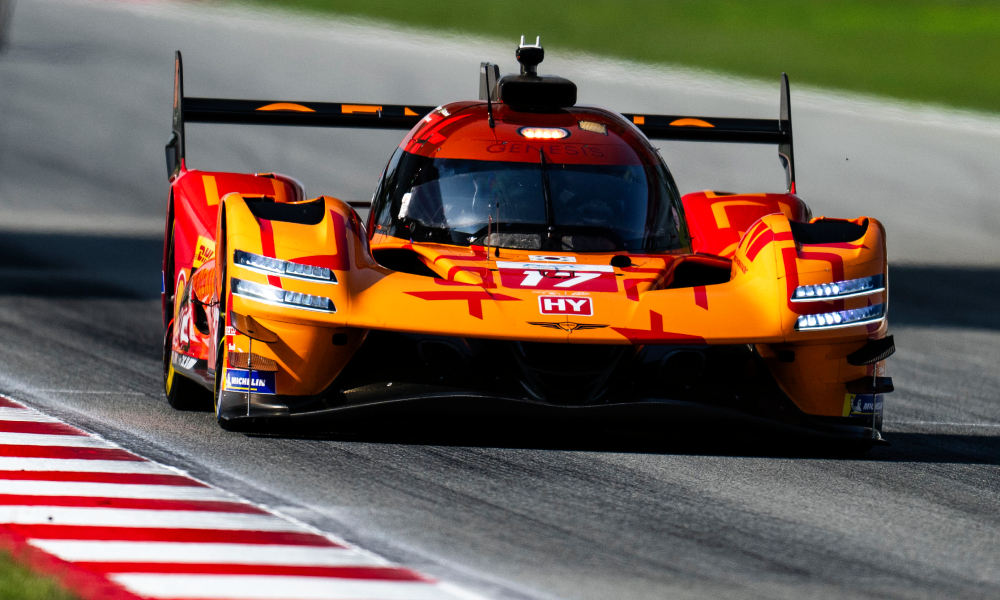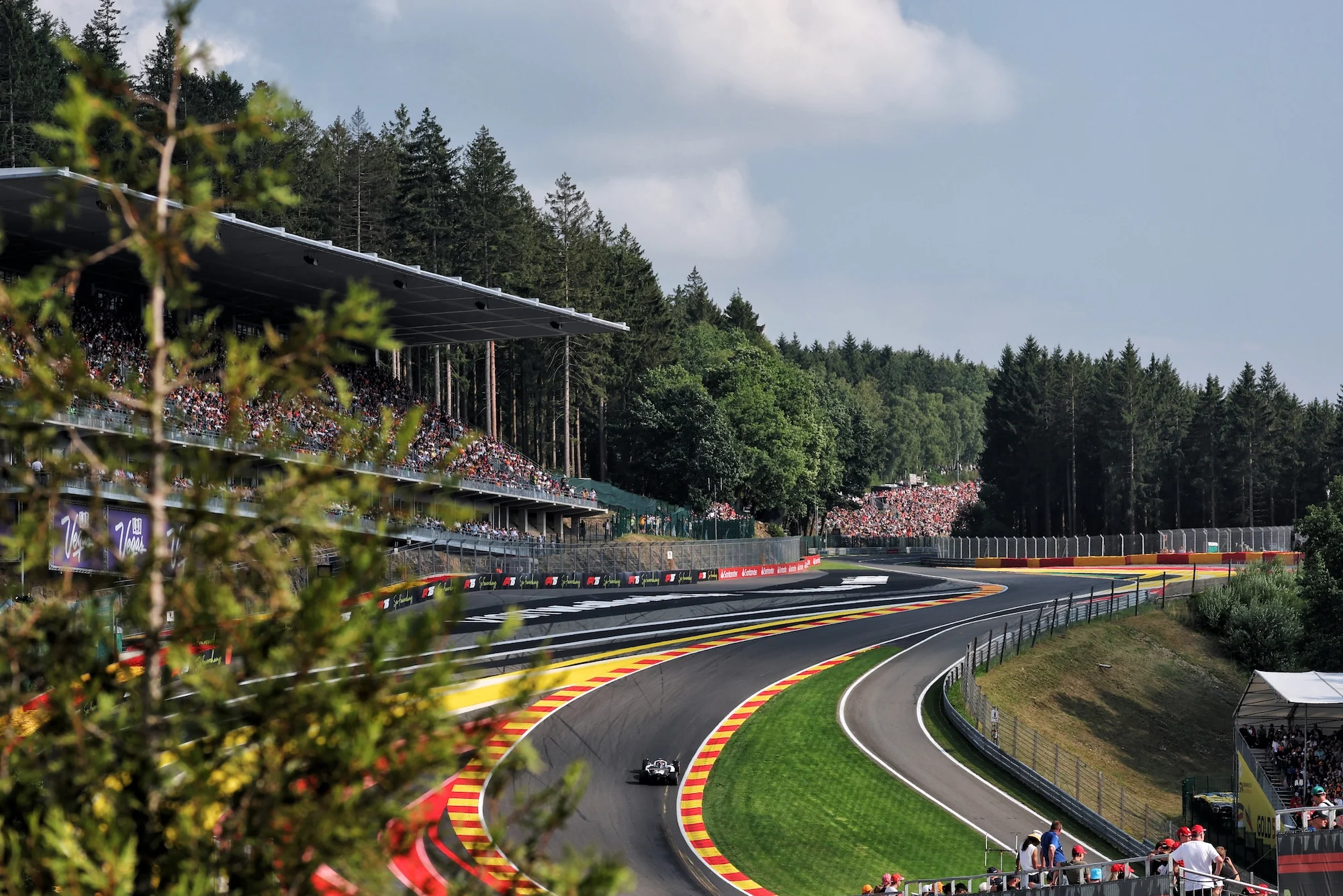
The longest circuit on the calendar, Spa-Francorchamps brings together speed, elevation changes, unpredictable weather, and a layout that demands practically everything from a Formula 1 car. Decades after its World Championship debut, the Belgian track remains regarded by drivers and engineers as the season’s ultimate test.
In an era when Formula 1 races on ultramodern circuits scattered around the world, few tracks preserve as special an aura as Spa-Francorchamps. The circuit nestled in the Belgian Ardennes has traversed generations of cars, drivers, and regulations without losing a single characteristic that has followed it since its inception: the ability to challenge every aspect of Formula 1 simultaneously.
It’s not merely a matter of tradition. Nor of nostalgia.
When drivers are asked about their favourite circuit, Spa repeatedly ranks among the first names. The same happens when engineers talk about the tracks that best reveal a car’s strengths and weaknesses. In a calendar crowded with layouts designed to deliver great races, Spa continues to be treated as a comprehensive test for drivers, teams and machines.
And there are good reasons for that.

A circuit that demands everything at once
Unlike most current tracks, Spa does not allow a team to hide the car’s weaknesses.
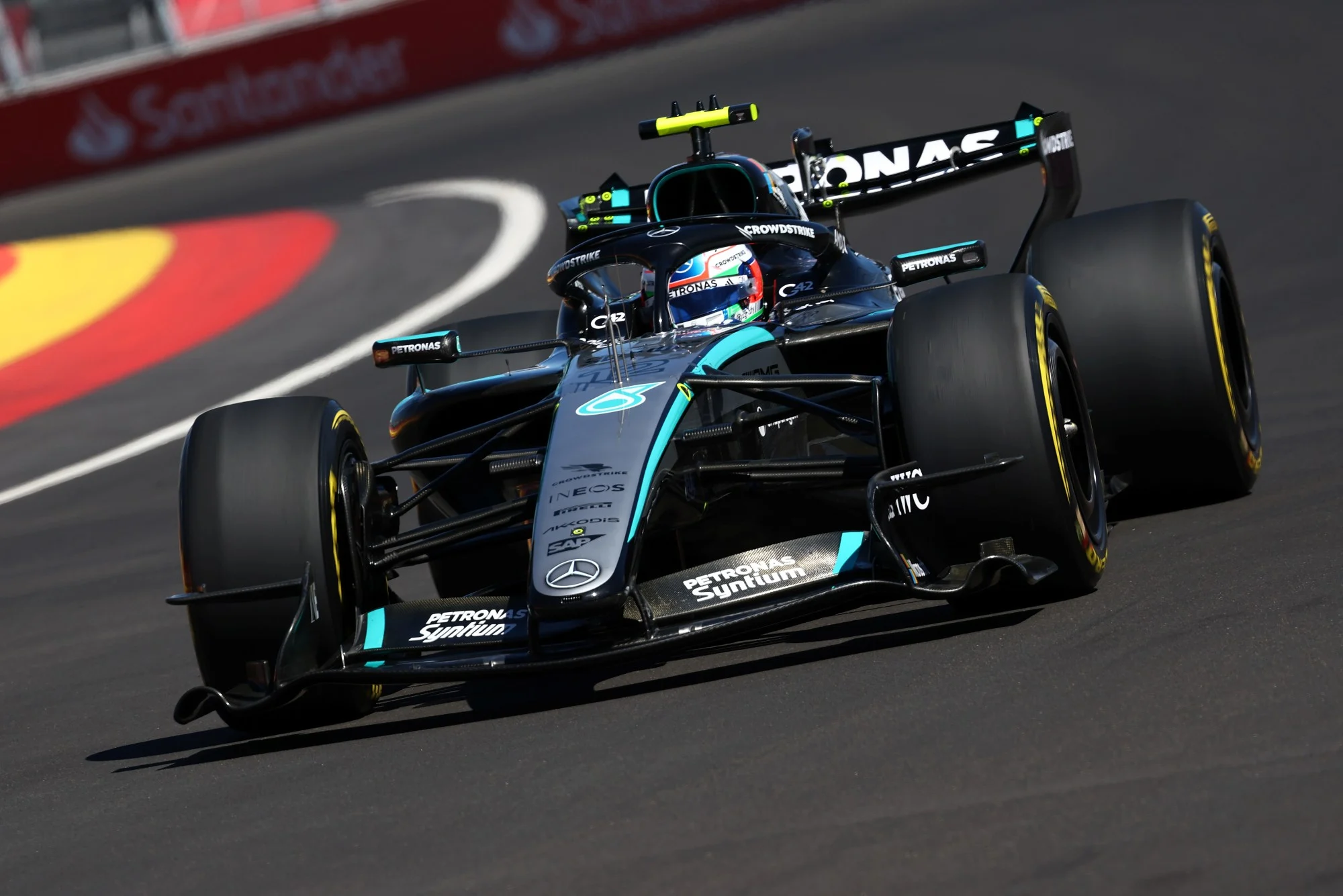
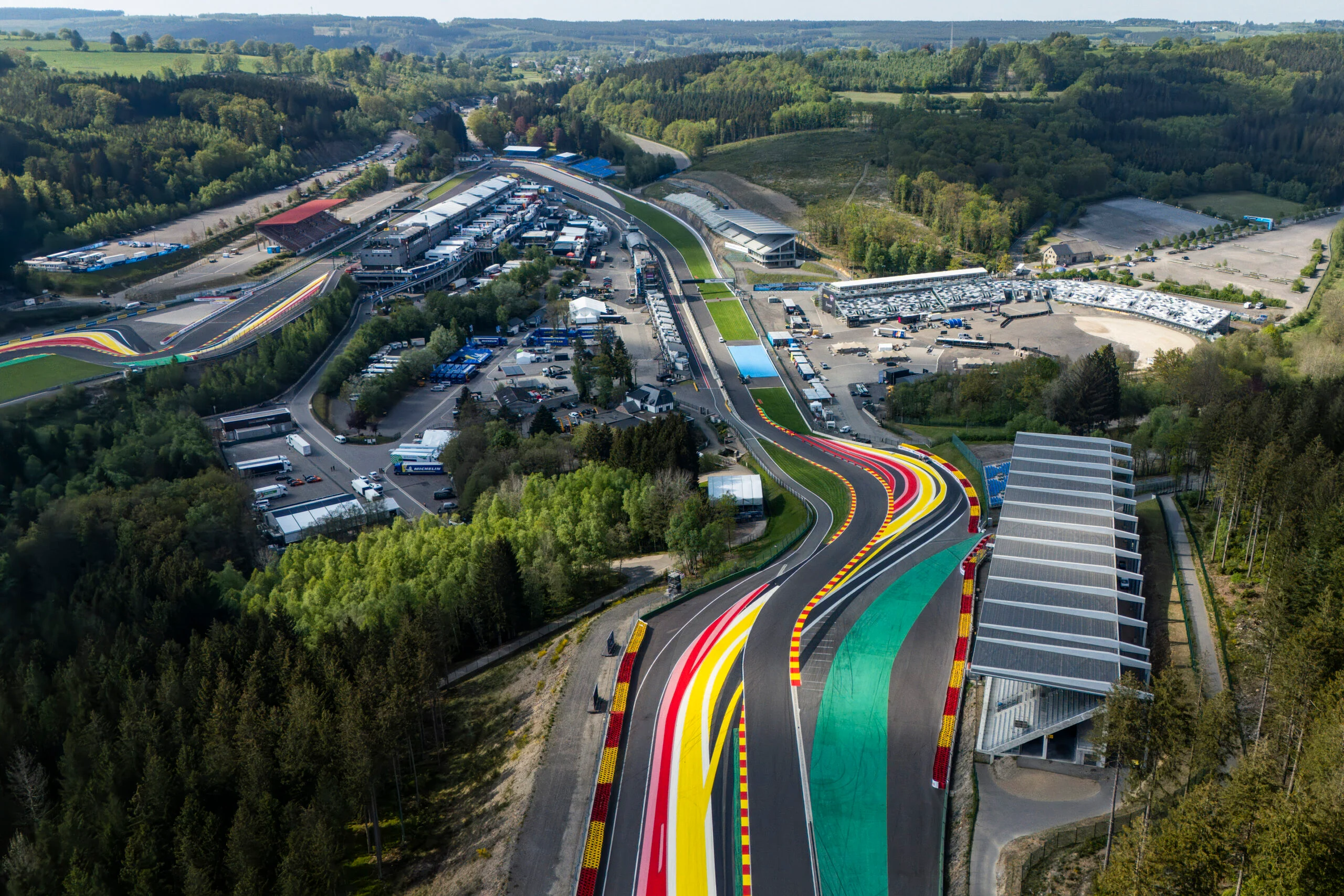
With a little over seven kilometers in length, the grandest circuit on the calendar blends long straightaways, high-speed corners, heavy braking, abrupt changes of direction, and one of the season’s greatest elevation variations. This forces engineers to find an extremely delicate compromise between aerodynamic loading, straight-line speed, and stability.
A car configured to gain speed on the long Kemmel Straight may struggle in the fast corners of the second sector. On the other hand, a setup aimed at maximizing grip in Pouhon, Blanchimont, and the mid- to high-speed sequences tends to lose performance precisely where overtakes happen.
Finding that balance perhaps represents the championship’s greatest technical challenge.
That is why Spa is often regarded as one of the best tracks to gauge the real performance of a project. If a car runs well in Belgium, it typically presents a competitive package on nearly any circuit on the calendar.
The lap never looks the same
Another element that makes Spa so special is its unpredictability.
In no other circuit of the championship does the weather have such a constant influence over the weekend. Located in a mountainous region, the track frequently experiences rapid changes in weather conditions. It is not uncommon for one sector to be completely dry while another endures heavy rain, forcing drivers and strategists to make decisions in mere seconds.
This characteristic turns nearly every session into an exercise in adaptation.
Drivers must adjust braking references, alter how they attack certain corners, and manage grip levels that shift as the lap unfolds. For engineers, predicting tire behavior and choosing the optimal moment for a pit stop becomes an even more complex task.
Few circuits can alter a race’s dynamics as much as weather can.
More than courage
For many years, Spa was mainly known for Eau Rouge and Raidillon, perhaps the most famous sequence of corners in Formula 1 history.
While it remains one of the sport’s most impressive sections, reducing Spa to the courage required to carry that rise at speed would be an oversimplification of the circuit.
The true challenge of the track lies in the combination of factors.
The driver must completely trust the car, but also know precisely when to preserve tires, when to ride the curbs, how to manage traffic, and where to take risk. On such a long circuit, a small mistake can compromise an entire lap. At the same time, shaving a few tenths in just one sector can mean several places on the grid.
It is a track that rewards talent, but also experience, intelligence, and adaptability.
A test for cars and drivers
Spa also tends to reveal the differences between teams quite clearly.
Circuit configurations can favour particular traits of a car. At Spa, that happens less often. As the layout demands efficiency across virtually all performance aspects, it becomes hard to hide deficiencies in power, aerodynamics, stability, or traction.
That is why positive results in Belgium tend to carry special weight within the factories.
When a team manages to be competitive in Spa, it usually gains confidence for the rest of the season. Likewise, a performance that falls short often triggers important red flags about the technical package.
That is one of the reasons engineers keep a close eye on everything that happens during the Belgian weekend.
Why is Spa still unique?
Over the past years, Formula 1 has incorporated new circuits, more sophisticated technologies, and ever faster cars. Yet Spa-Francorchamps remains nearly irreplaceable.
Its blend of history, technical characteristics, and natural challenges creates a rare scenario in modern motorsport. It isn’t just a pretty or traditional track. It remains a circuit that continues to demand the maximum from drivers and teams, regardless of the generation of cars.
Perhaps that is precisely what explains its reputation.
While some race tracks reward only power, others value aerodynamics or traction alone. Spa demands it all at once. It requires speed, precision, courage, intelligence, and adaptability.
That is why, more than seven decades after its World Championship debut, the Belgian circuit remains viewed by so many championship participants as Formula 1’s greatest challenge.
And that is precisely why every return to Spa-Francorchamps continues to be one of the season’s most anticipated moments.