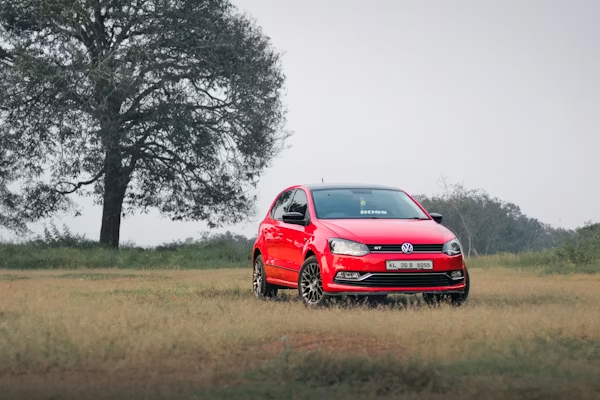
Before Sébastien Ogier wrapped the Polo R WRC around a world title in 2013, Volkswagen had already spent years quietly proving something that grassroots motorsport builders had sensed for a decade: the Polo is a seriously capable racing platform. The sixth-generation WRC car got the headlines, but it was the fifth-generation road car, produced between 2009 and 2017, that quietly became the backbone of club rally, one-make championships, and budget track day builds across Europe.
If you have ever considered building your first proper competition car, or upgrading a street Polo into something that can handle real punishment on a stage or circuit, the Polo V deserves a much closer look than it typically gets.
Why the Polo V Became a Grassroots Motorsport Staple
The Polo V arrived on a platform that Volkswagen had spent years refining for efficiency and rigidity. The MQB-predecessor PQ25 chassis gave the car a torsional stiffness that many lightweight hatchbacks at the same price point simply could not match. For rally use, that rigidity translates directly into predictable handling, consistent suspension geometry under load, and a car that tells you what it is doing rather than surprising you.
The weight distribution was another factor. At around 1,070 kilograms in base trim, the Polo V sits light enough to make modest power feel generous. Club rally engines are often restricted to keep costs manageable, and a car that responds to 130 horsepower like it means it is enormously more fun to drive at competition pace than a heavier rival with the same output.
The engine range also played into this. The 1.2 TSI and 1.4 TDI variants offered strong low-end torque characteristics that suited the stop-start rhythm of rally stages, while the 1.4 TSI GTI-adjacent units gave track day builders something genuinely exciting to work with on a realistic budget.
What the Rally Community Looked for in a Build
Talking to club rally navigators and co-drivers across France and Belgium, a pattern emerges quickly. The Polo V earned its reputation not by being spectacular, but by being deeply reliable. Stage after stage, with minimal preparation beyond the mandatory roll cage, harness, and fire suppression requirements, these cars absorbed abuse that would have ended many rivals’ events.
The front end geometry was a particular talking point. The MacPherson strut layout at the front is familiar and widely understood, which keeps setup costs manageable. Camber adjustments, corner balancing, and damper tuning on a platform this well-documented is a job that any competent suspension specialist can execute without proprietary knowledge or expensive factory tooling.
Body parts availability also matters enormously in rally. A car that gets contact on a stage needs to be able to continue and, more importantly, needs to be repairable overnight between legs with readily sourced components. The Polo V has strong parts coverage across European markets, which means that sourcing something like a par choc avant polo 5 after a stage incident is a practical reality rather than a logistical nightmare. That accessibility is one of the most underrated competitive advantages a rally car can have.
The Polo GTI Cup and One-Make Racing: An Underrated Pathway

Beyond club rally, the Polo GTI Cup represents one of the cleanest single-make championship structures in European junior motorsport. The series ran cars based on the fifth-generation platform for several seasons and produced drivers who moved on to higher-profile touring car and GT championships.
The appeal of one-make racing for younger drivers is straightforward: when every car is identical, the championship measures drivers rather than budgets. But what the Polo GTI Cup demonstrated specifically was how well the platform tolerated the demands of close, aggressive circuit racing without generating excessive maintenance costs between rounds.
According to the FIA’s own regulatory framework for entry-level circuit competition, the ability to access standardised, cost-controlled parts is one of the primary conditions for approving a one-make series as a recognised pathway. The Polo V’s parts ecosystem met that bar comfortably, and the series benefited from it directly across its competitive seasons.
Building a Polo V for Track Days Without Losing Your Mind
For the reader who is not ready to commit to full competition preparation but wants a Polo V that performs honestly on track, the approach is more accessible than many assume.
Start with the geometry. A quality coilover kit matched to the factory suspension pickup points, combined with proper corner weighting and an alignment that prioritises front grip, transforms the car’s circuit behaviour without touching the engine. The Polo V in stock trim understeers in a way that feels safe for road use but blunts circuit feedback. Sorted geometry changes the conversation entirely.
From there, brake fluid and brake pads are the next priority. The factory braking system is competent but not calibrated for repeated hard stops from high speed. Upgraded pads with a higher thermal threshold and a fluid rated for track temperatures make the car feel significantly more confident in the braking zones, particularly late in a longer session when heat builds.
Engine modifications are where the budget tends to expand fastest, but the Polo V rewards modest improvements well. An intake and a remap on the 1.4 TSI unit deliver a noticeable step in mid-range response without demanding drivetrain upgrades that cascade into expense.
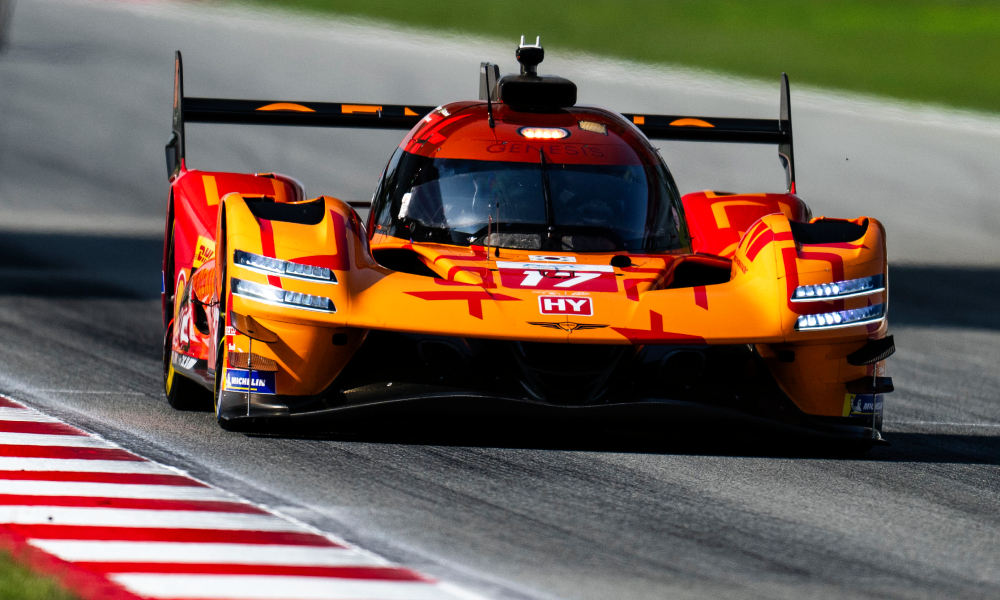
For those following the motorsport news cycle while also managing a build, staying across the broader technical conversations happening in categories like the WEC or the latest developments in endurance racing can actually inform how you think about durability and parts sourcing on your own project. The engineering philosophies that make professional endurance cars last are often the same ones that keep a club rally car together across a full season.
The Real Cost of Getting a Polo V Competition-Ready
Transparency about costs is something the grassroots motorsport community values above almost everything else. A Polo V in decent mechanical condition can be found across European classified markets at prices that make it accessible as a dedicated motorsport project. The cars depreciated steadily through their production run and are now at a point where a solid example does not represent a significant financial risk as a starting point.
Safety equipment is non-negotiable and represents the largest fixed cost. A properly installed roll cage, FIA-rated harness, and approved fire suppression system will typically represent the majority of the initial build budget regardless of the car. This cost is consistent across platforms, which means the Polo V’s lower acquisition price gives it a genuine edge over more expensive starting points.
Ongoing parts costs, as noted, are well controlled. The broad production volume of the Polo V and its extensive geographic market presence means consumable components are priced competitively and rarely hard to locate, even for less common trim configurations.
Conclusion
The Volkswagen Polo V is one of the most honest answers to the question of how to enter motorsport seriously without betting the entire budget on a single event. Its platform rigidity, weight, well-understood suspension geometry, and strong parts availability make it a car that rewards preparation and punishes complacency in exactly the way a good competition machine should.
Whether the ambition is a club rally championship, a one-make series, or a track day tool that genuinely develops your driving, the Polo V remains one of the most intelligent starting points on the market. The professional category headlines belong to other cars. The real-world competition record of this platform speaks loudly enough on its own.