There is a question in motorsport that seems to have only one answer: Does Interlagos pair with any category? Yes.
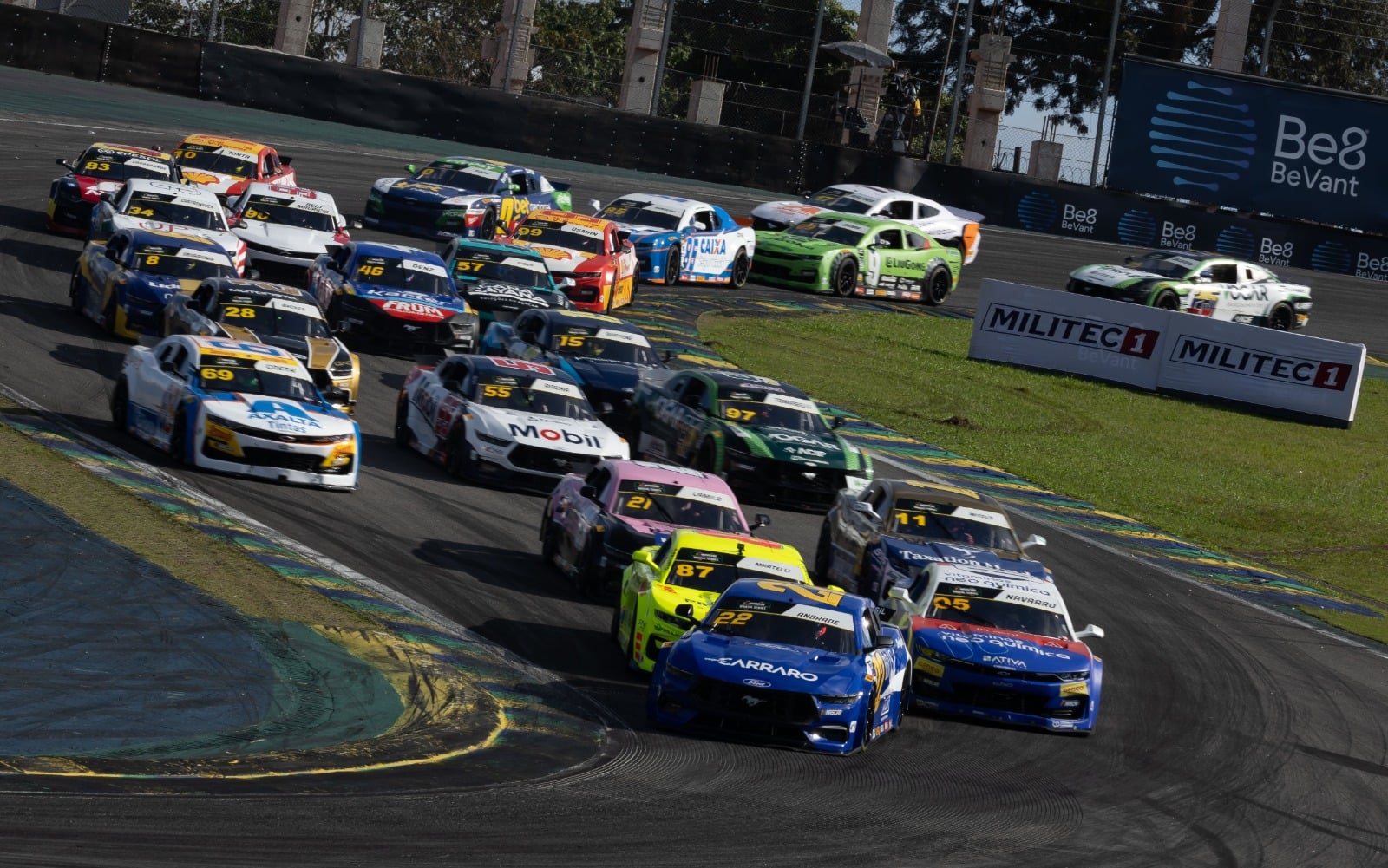
But some championships manage to make that answer even more complete. Do Interlagos and the NASCAR Brasil Series go together? Yes, it’s practically a perfect match — although what ‘perfect’ means always depends on who’s watching and who’s behind the wheel. What the third round of the 2026 season showed is that the São Paulo circuit amplifies what NASCAR Brasil delivers by nature: intensity and unpredictability.
Since Friday’s practice, what drew attention was the difficulty for any driver or team to pull away from the rest of the field. A trend that had already been emerging in the previous stage, after the drivers adapted to the RiSE26. Therefore, it became clear that the weekend’s secret at Interlagos would not be speed, but race-reading.
On Saturday afternoon, Cacá Bueno read that situation with precision and secured the Sprint Race victory, which defined the round’s pole position. The format continues to perform its role of warming up the crowd and shaping the Sunday narrative, like a preview
On the following day, the “terra da garoa” lived up to its nickname and altered the scene of Race 1. The track, halfway between dry and wet, demanded constant adaptation from the competitors. And it was exactly there that Nicolas Costa’s victory began to take shape — more through reading the race than through imposing it. The race also highlighted the space NASCAR Brasil is opening for new stories, since the main adversary in the final stretch was the rookie Murilo Rocha, who pressured until the end and finished second.
In Race 2, the dynamic was strongly marked by the yellow flags. Not always does that help the pace of the race, but NASCAR Brasil, inspired by NASCAR in the United States, handles this reality well by insisting on a green-flag decision to the end. This avoids races “resolved under the safety car” and keeps alive the idea that the result must be decided on track.
Throughout the race, leadership changed hands several times until it stabilized with Thiago Camilo, who seemed to have built a solid victory within the race’s context. However, in the final meters, Nicolas Costa again found space where it seemed impossible, using the slipstream and power boosts effectively. The overtake by nine thousandths closed the Interlagos weekend with a golden finish.
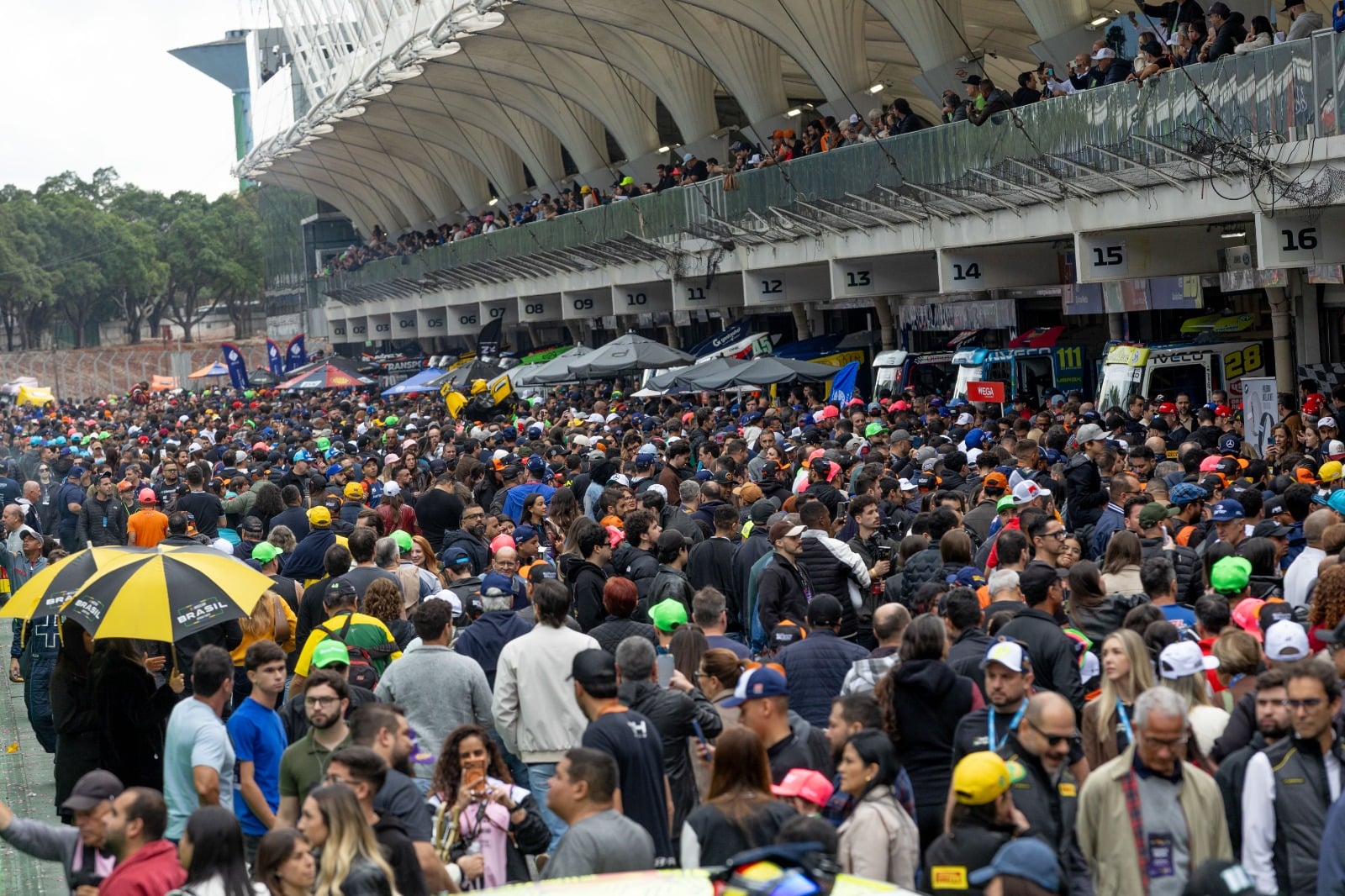
Beyond the track, another positive aspect of the São Paulo weekend were the activations with the audience. Those who were at Interlagos, in addition to the traditional pit walk, could meet the NBA trophy, the famous “Larry,” in another NASCAR Brasil initiative to bring the world of American sports closer. Also notable was the tribute to Kyle Busch, one of the great names in U.S. NASCAR.
Bringing a brand like NASCAR to Interlagos isn’t simple. A few years ago, the question was whether this product, with such a strong North American identity, would fit on a circuit so symbolic for Brazilian motorsport. Today, perhaps the question is different: Is Interlagos perfect for NASCAR Brasil?
Maybe it doesn’t have to be perfect. Interlagos and NASCAR Brasil don’t operate under that logic. They thrive on unpredictability. And, under that criterion, the pairing remains hard to contest.