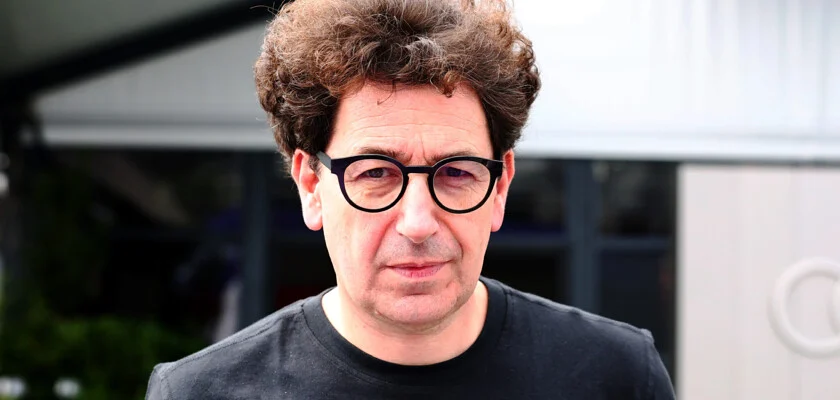
Mattia Binotto defended a revision of the technical concessions system for power unit manufacturers in Formula 1. Audi’s team principal believes that a similar approach to the one used for chassis could accelerate the convergence of performance among the competitors.
The discussion gained momentum after the FIA concluded that the Red Bull Powertrains-Ford power unit is the most efficient on the grid, outperforming Mercedes in the criteria evaluated. The decision surprised much of the paddock, especially because the analysis only considered the combustion engine performance, without including the contribution of electric systems.
This evaluation system, known as ADUO, was created precisely to allow manufacturers at a technical disadvantage additional development opportunities and to help reduce the gap to rivals. However, the way this system is applied has been subject to questions.
During his statements in Barcelona on Friday (12), Binotto stated that he had no doubts about the FIA’s assessment, even after Audi benefited from a concession within the program. Still, he suggested that the method used could be reconsidered.
“If the kilowatts-based ADUO principle is the correct approach, that can be debated,” the executive said. According to him, Formula 1 already uses a different model to promote convergence in the development of the cars.
Binotto noted that teams finishing further back in the standings receive benefits such as longer wind tunnel usage time, which helps to reduce competitiveness gaps: “There is a similar system for the chassis. If you are behind in the standings, you have more opportunities in the wind tunnel and in other areas. This is a way to bring the teams closer together,” he explained.
In the Italian’s view, the same logic could be applied to power units: “Maybe we should do something very similar to what happens with the chassis, basing everything on the standings from previous seasons. If the goal is convergence and a more balanced grid, perhaps this is the simplest way to do it,” he added.
Despite the suggestion, Binotto reaffirmed confidence in the sport’s governing body: “This is how the regulation is written today and I believe we must trust the FIA completely. I am sure the FIA made the right assessment. What should we do in the future? Should we establish a different type of ranking? Maybe yes,” he concluded.