The ACO president, Pierre Fillon, has insisted that the agreement with Toyota to supply hydrogen-powered powertrains does not mark the end for the role of fuel-cell technology within the FIA World Endurance Championship and the 24 Hours of Le Mans.
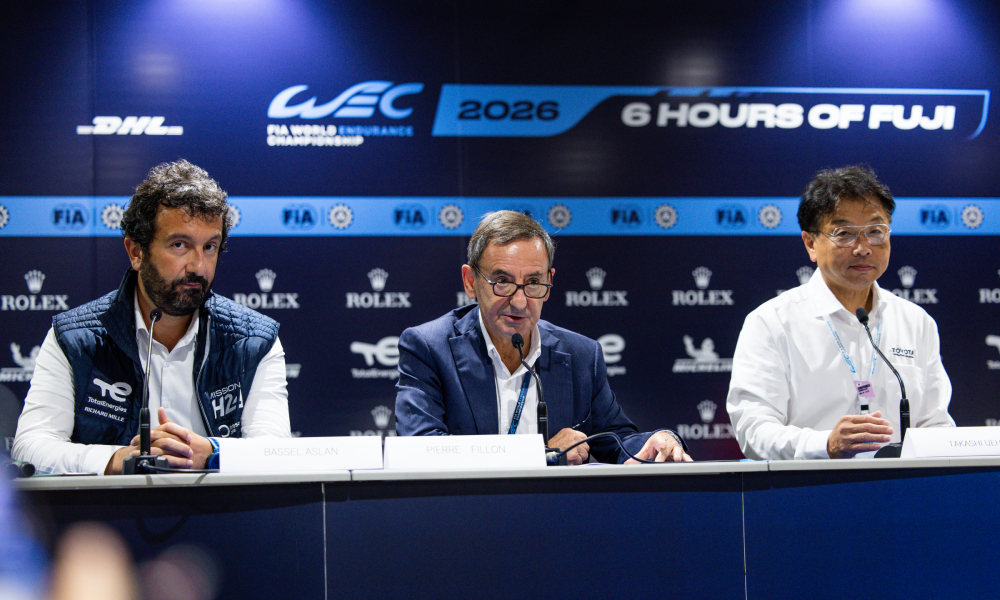
Those comments came last month, when reporters were briefed after a press conference held on the eve of the WEC’s 6 Hours of Fuji event, at which it was announced that the H24EVO initiative, backed by the ACO, would transition from a fuel-cell setup to an internal-combustion hydrogen propulsion system developed by Toyota.
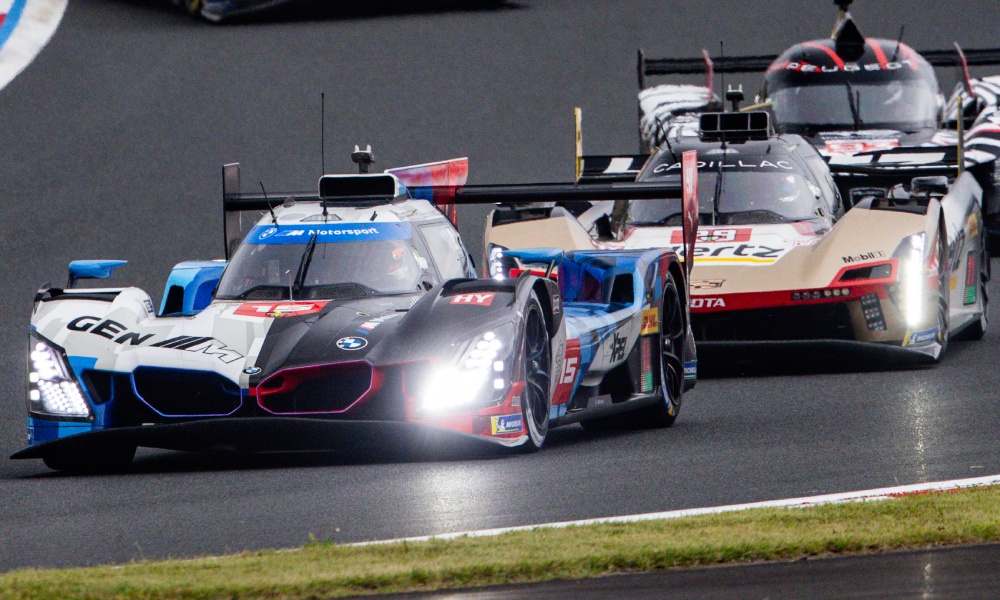
Toyota has long been the leading WEC manufacturer with a keen interest in hydrogen, having pioneered hydrogen combustion technology in Japan’s Super Taikyu series, although other brands, such as BMW, have shown interest in fuel cells.
Hydrogen-powered cars are slated to be eligible to compete as early as 2030 as part of a new generation of Hypercar competitors in the WEC and at Le Mans, with provisions allowing both fuel cells and liquid-hydrogen combustion-powered machines.
“Fuel cells remain within the scope,” Fillon remarked. “But for now, it’s simpler to pursue an ICE path, in terms of technology and weight.”
“With fuel cells, there’s a need for additional development, because the technology is still in its early stages. Yet the rules will permit a hydrogen fuel-cell entry.”
“Another crucial consideration for the fans is that we are in motorsport, and the sound and the noise are important, so you can preserve that with an ICE.”
As the ACO disclosed earlier this year, a System of Equivalence of Technology will be used to balance hydrogen and conventional Hypercars under the 2030 rules, with an anticipated minimum weight difference of 160 kg between the two platforms.
However, Fillon declined to speculate on whether H2 machines could reach speeds comparable to current Hypercars, or whether traditionally powered cars would need to be restricted as part of the balancing process.
“We have no data on H2 yet, so our approach will be incremental,” he explained. “As soon as we possess enough data to achieve a solid balance between gasoline Hypercars and H2 Hypercars, we will be able to align the two categories.”
“Naturally, the short-term objective is parity between H2 and gasoline, but initially we don’t want H2 to be two or three seconds faster at Le Mans, because data is lacking.”
“We are in 2026, and by 2029 we expect to have more data to enable us to harmonize them.”
A public unveiling date for the updated H24EVO has been set for 2028, after which the car could potentially compete at Le Mans as a Garage 56 entry, according to Fillon.
“It falls within the realm of possibility,” he said. “Our task is to construct the car. We have the engine, the tank, and 18 partners for the Michelin H24 program, so the priority now is to build the vehicle.”
“As soon as the car is seen on track, we will determine whether it starts as a Garage 56 entry, or in the Michelin Le Mans Cup, or in the ELMS, and then, perhaps, more opportunities may follow.”
Earlier this year, the ACO announced that hydrogen storage tanks would be incorporated into broader plans to redevelop the Le Mans pit complex by 2030 or ’31. Fillon, however, suggested a temporary solution could be implemented beforehand.
“In the early stages, we may field one, two, or perhaps three [H2] cars, and we are working on a mobile system,” he noted.
“Naturally, there will be piping in the paddock, since the regulations differ between Japan and France. In Japan, you can place your H2 truck right behind the garage, but in France that isn’t possible—you must maintain a 100-meter gap.”
“Consequently, the major infrastructure will be the pipe linking the truck and the garage, while the rest of the system will be mobile so it can be deployed at Spa and Fuji. All of this is being coordinated with the pit-building reconstruction.”
Fillon clarified that the hydrogen fueling infrastructure will most likely be positioned toward the end of the pit lane, where the final pit garages are currently located.