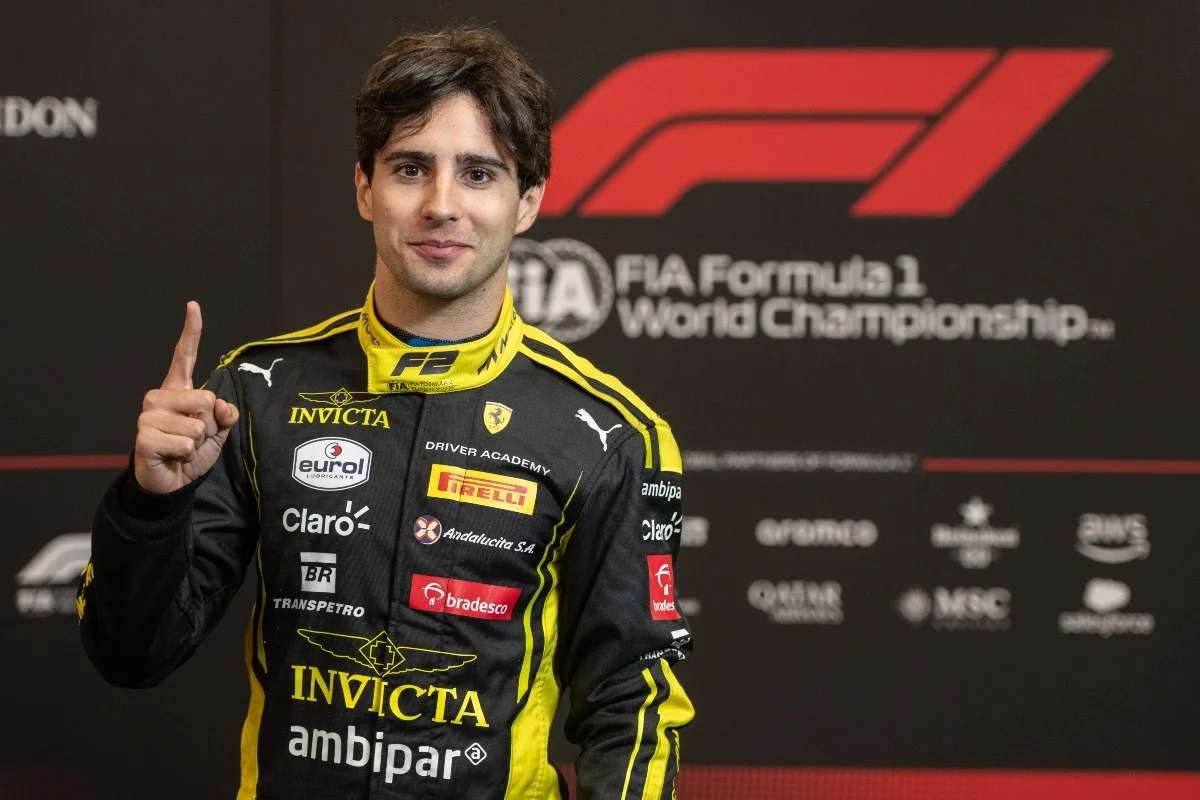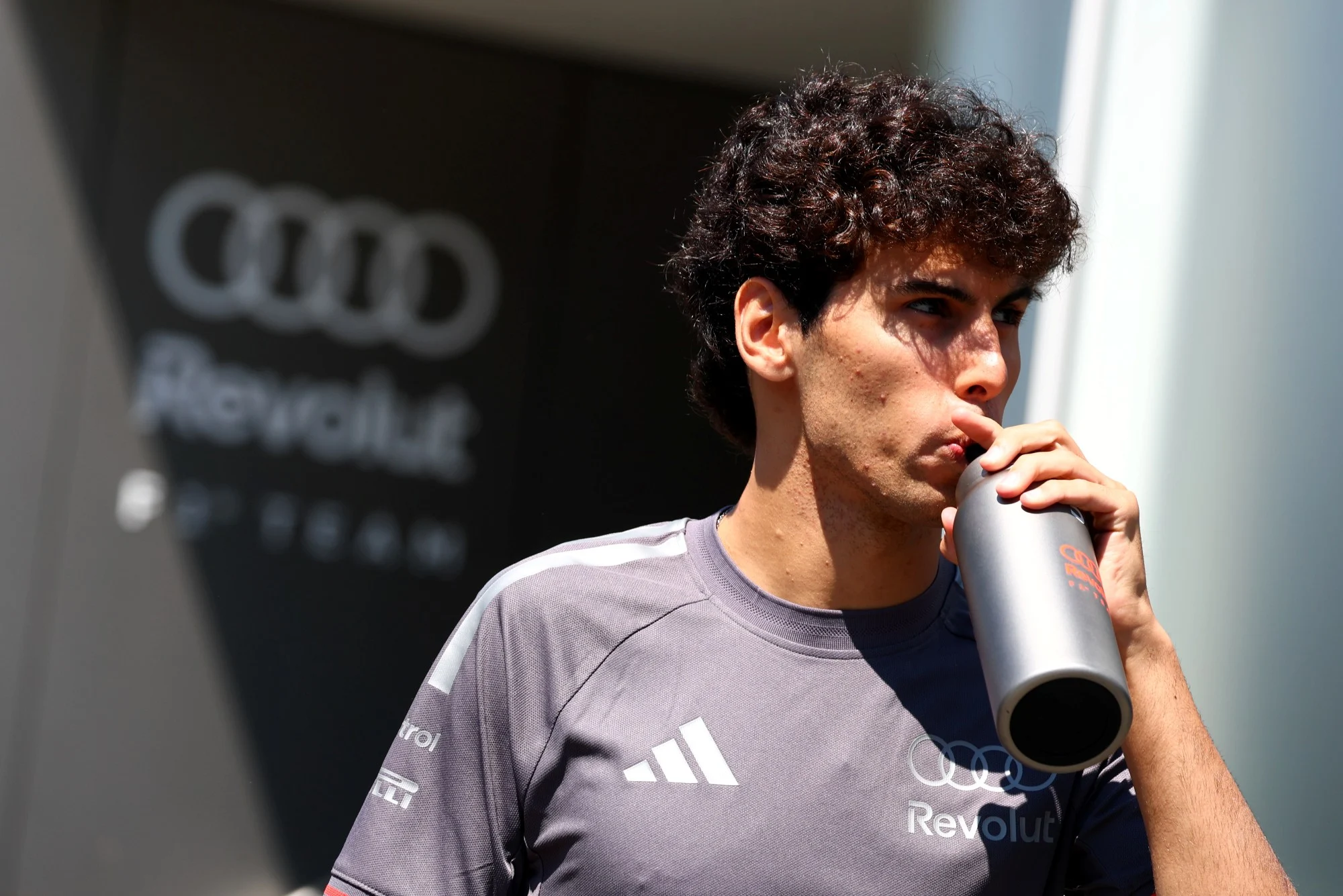
Spa-Francorchamps has always held a special place in Formula 1 by testing not only the quality of the cars but also the courage and confidence of the drivers. In its second season in the category, Gabriel Bortoleto arrives at the Belgian Grand Prix in the best moment of his season and facing one of the biggest challenges of his career.
There is a key difference between driving fast and fully trusting the car. In most Formula 1 circuits, a driver can compensate for small limitations of the equipment by braking a few metres earlier, being more conservative at the entry of corners, or adopting less aggressive lines. At Spa-Francorchamps, that margin virtually disappears.
The Belgian layout demands decisions made in fractions of a second, many of them at speeds well over 250 km/h. High-speed corners, abrupt elevation changes, and sectors where any hesitation costs precious tenths make Spa one of the calendar’s most demanding tracks for the driver.
That is precisely why the Belgian GP is usually pointed to as one of the greatest tests of a Formula 1 driver’s confidence.
And it is in this scene that Gabriel Bortoleto lands for the tenth round of the season.

A driver different from the one who opened the season
Belgium finds a very different Bortoleto from the one who started the season in Australia.
Although the numbers still show an imbalance in the standings against Nico Hülkenberg, the Brazilian has evolved steadily throughout the championship, especially in the races. The adaptation process to the Audi’s car became evident in the latest rounds, where he began extracting more solid results and taking better advantage of opportunities during the races.
Silverstone was yet another example of this evolution.
On a circuit known for requiring precision in fast corners, Bortoleto delivered a consistent pace, managed the tires well, and built a mature race to finish again in the points. More than the result itself, what stood out was the natural manner in which he drove, avoiding mistakes and seizing every opportunity to gain positions.
It is precisely this growing confidence that can make the difference at Spa.
A circuit that does not forgive doubts
Spa possesses unique characteristics. Over more than seven kilometres, a driver faces slow corners, rapid direction changes, long straights, and stretches of extremely high speed. But what truly differentiates the Belgian circuit is the need to trust the car before even seeing the exit of the corner.
The sequence formed by Eau Rouge and Raidillon is the best-known example, but it is far from the only one. Corners such as Pouhon, Blanchimont, and several sections of the second sector demand that the driver maintains high speed, fully trusting in the car’s stability and the grip available.
In a circuit like this, any insecurity immediately shows up on the stopwatch.
That is why Spa tends to favor drivers who have already built a solid relationship with their equipment. It’s not enough to know the track; you must believe that the car will respond exactly as expected.
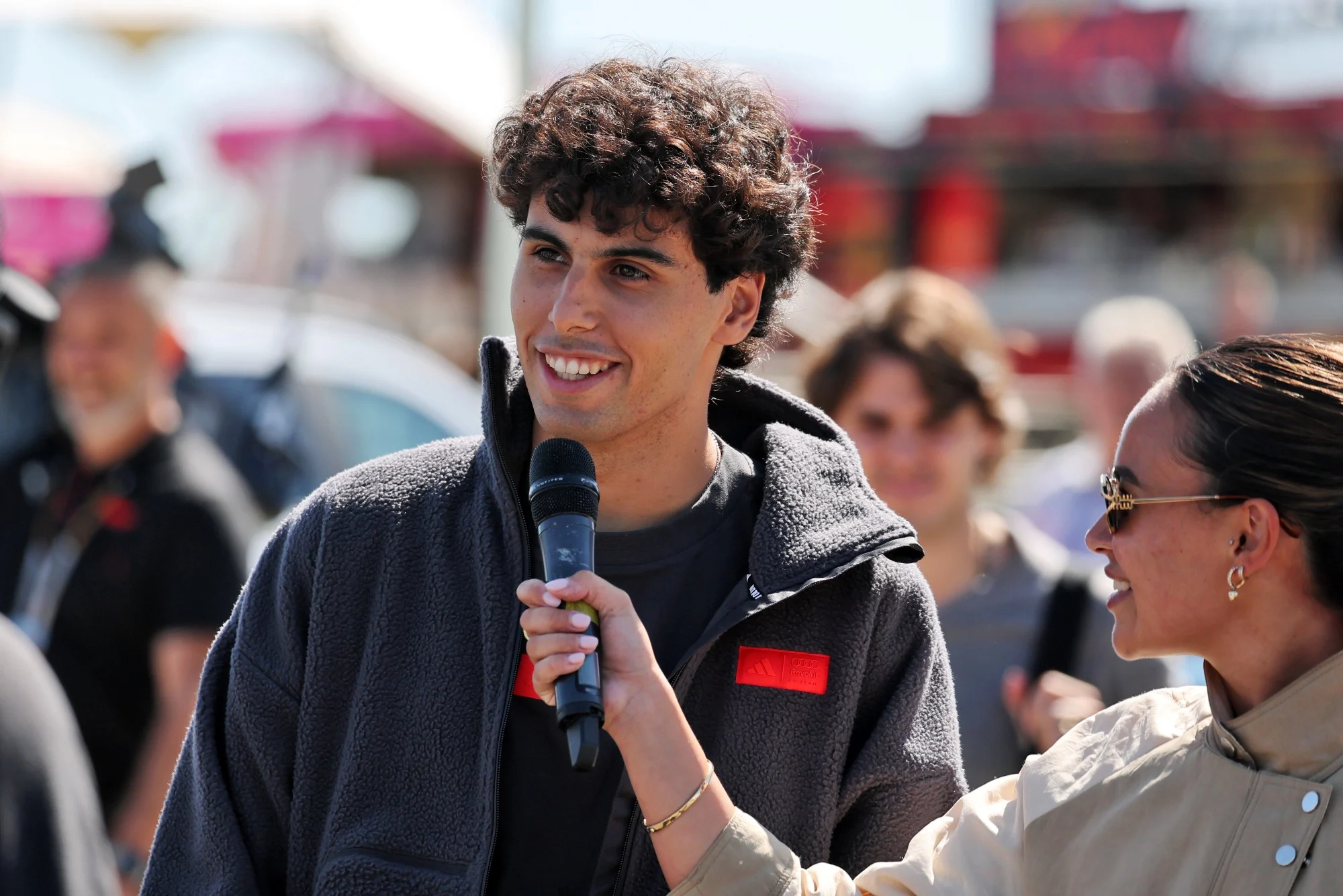
The evolution can appear precisely here
There is an interesting characteristic in Bortoleto’s season. If at the start of the championship the Brazilian seemed to rely heavily on qualifying to build his results, in the latest rounds the scenario has changed. The second year in Formula 1 brought more natural pacing in reading the races, better tire management, and a fuller understanding of the car’s behavior during the different phases of a race.
This evolution can be especially important at Spa. Being an extremely long track, small improvements in confidence can yield significant gains over a full lap. A driver who can accelerate a few metres earlier out of a corner or keep a bit more speed on high-speed sections may find several tenths without it being evident to those watching the race.
It is precisely this kind of progress that tends to separate experienced drivers from those still in the process of adapting.
More than speed
Another important aspect is that Spa does not reward aggression alone. The frequent weather changes, common in the Ardennes region, force drivers to continually adjust their braking points and their driving references. At times, one sector may be completely dry while another shows a wet track, creating extremely challenging conditions.
That makes the ability to read the track as important as speed.
Throughout the season, Bortoleto has shown growth precisely in this area. His races have become marked by fewer mistakes, better tire management, and a greater capacity to react to the circumstances of the race.
At Spa, these qualities can be as important as the car’s raw performance.
An important weekend for Audi
Belgium also represents a significant test for Audi.
The team has shown gradual progress in the latest rounds and arrives at the circuit believing it can stay close to the points. To do so, it will need to present a balanced car on one of the sport’s most complete layouts.
If he can repeat the steady performance shown recently, Bortoleto will have a good opportunity to confirm his evolution on a circuit that traditionally values confident and technically complete drivers.